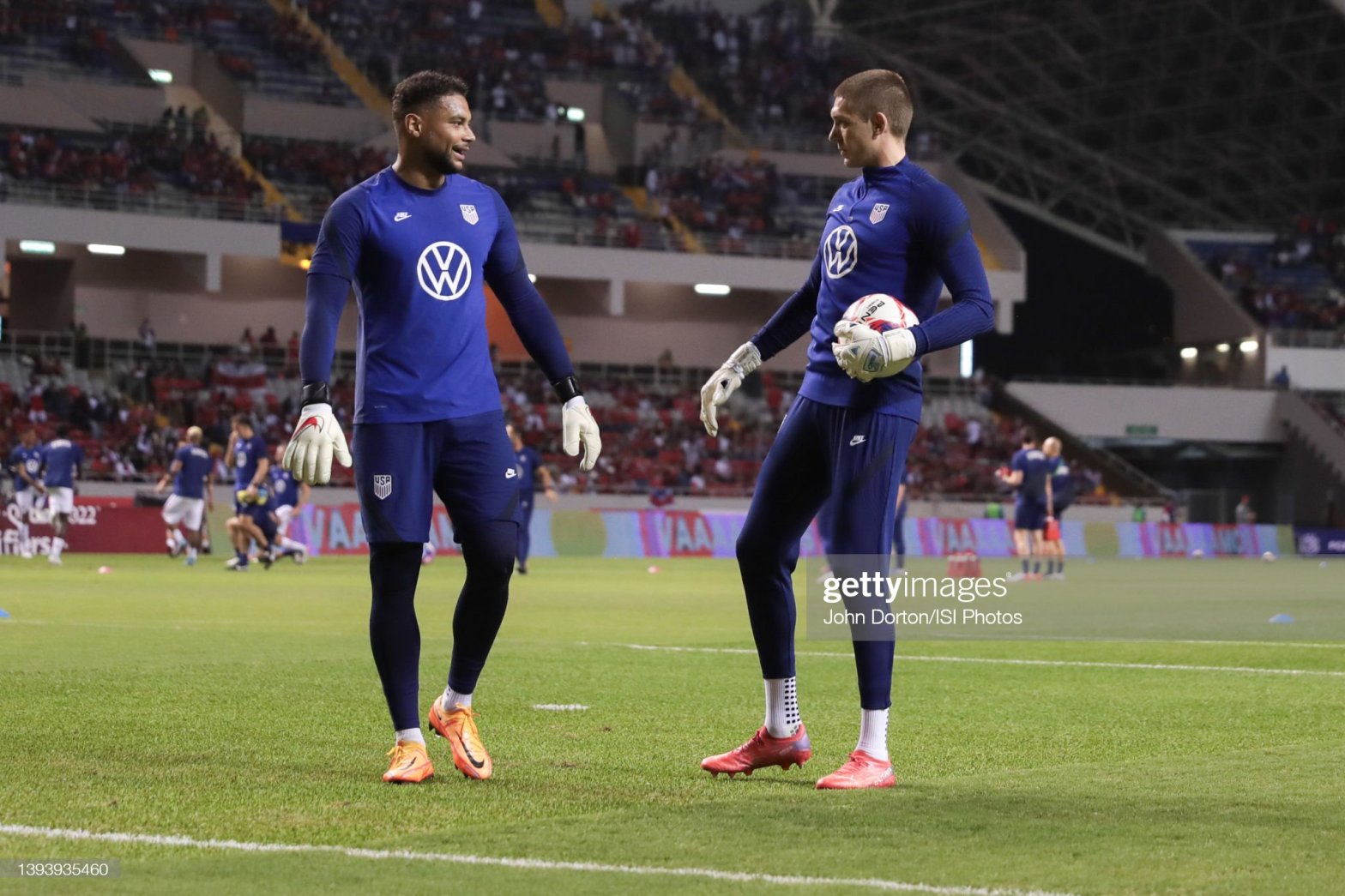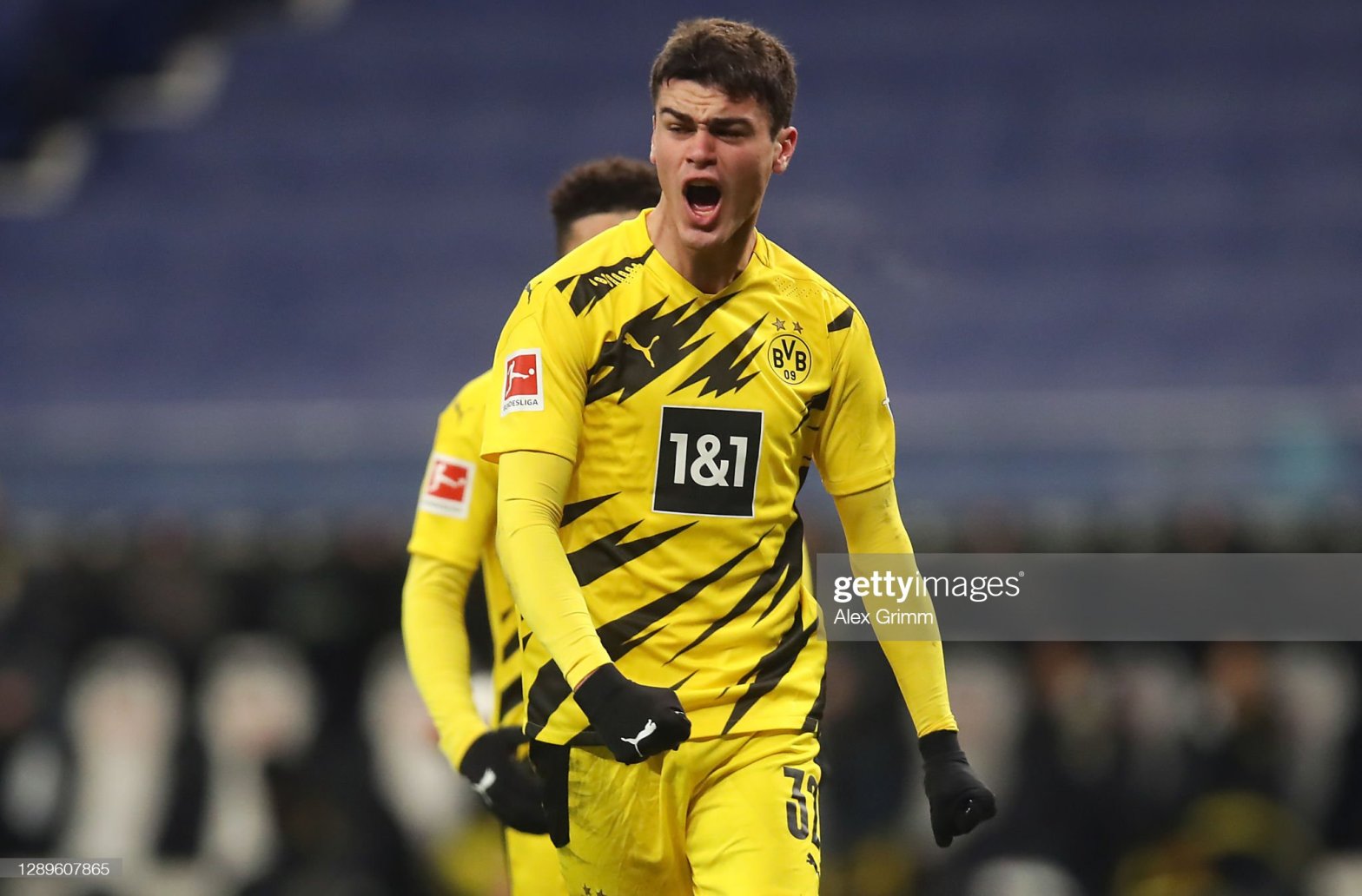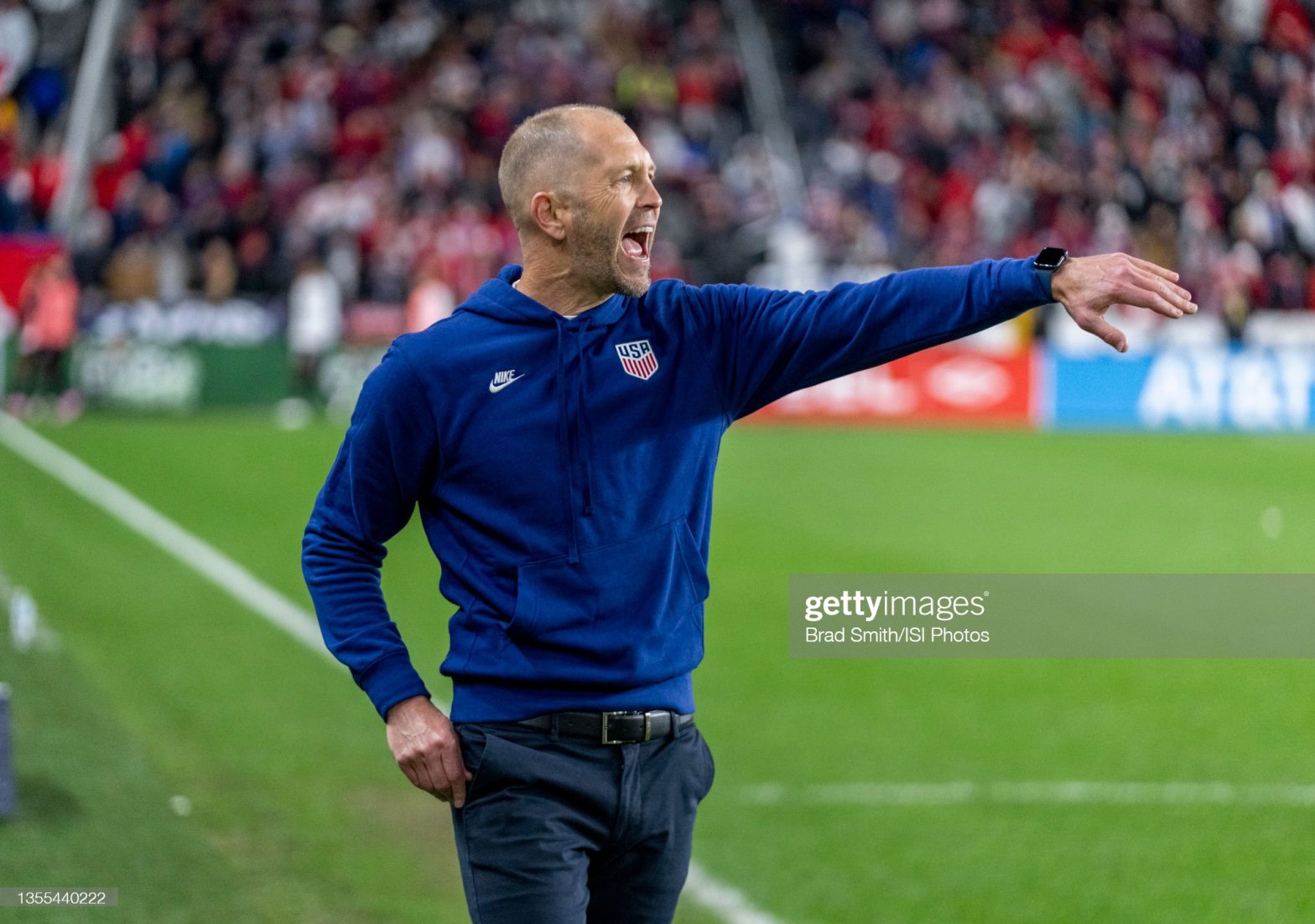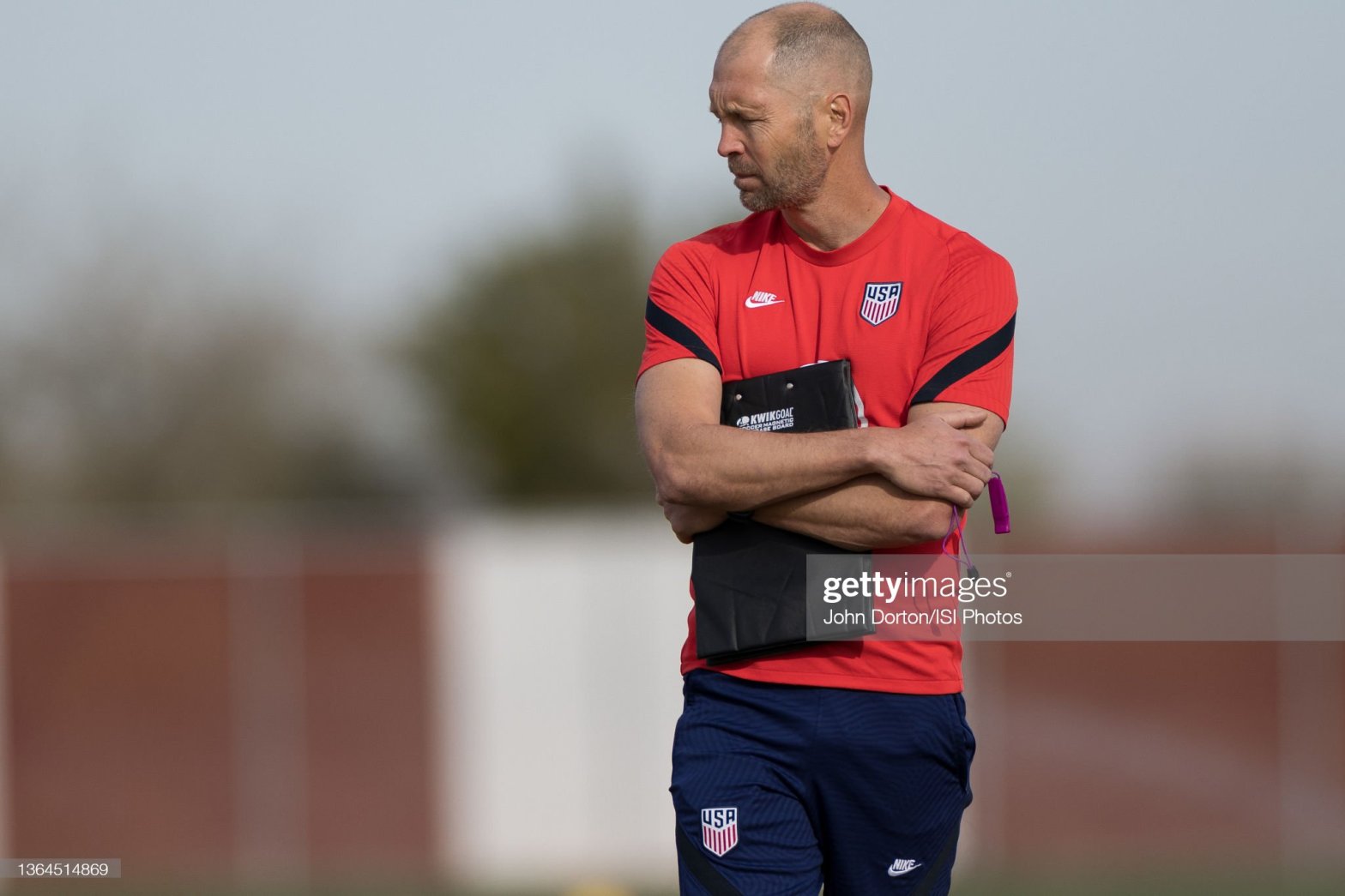
Featured

The March To 2026: Why the USMNT Head Coach Position is so Lucrative

As a new year begins, so too does the next chapter of the United States Men’s National Team.

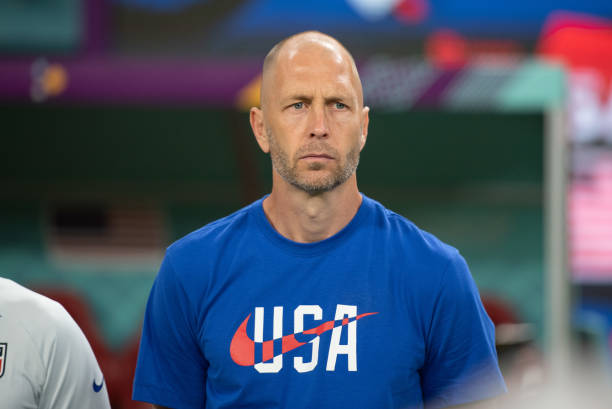
On January 1st of this new year, Gregg Berhalter’s head-coach contract with the USMNT expired, making him a free agent. After little communication about his situation leading up to the new year, a bombshell dropped shortly thereafter. In a shocking turn of events, Berhalter, on a newly created Twitter account, made the claim that he was blackmailed during the World Cup; in other words, someone brought an isolated incident of domestic violence to the attention of the U.S. Soccer Federation.

A day later, it was revealed that the perpetrator of the blackmailing was none other than Claudio Reyna, a USMNT legend in his own right and the father of Gio Reyna–the subject of much controversy over lack of playing time at the World Cup. The full situation is outlined here, but there has been no update on the situation since the initial incident. The USSF announced they would be starting an investigation, however.

As fans await the conclusion of this situation, it’s important to note that the head coach position is still up for grabs. So, while we wait, why not look at the nature of the head coach position? What makes this job so lucrative? What makes it one of the most intriguing positions in all of world soccer?

Current Situation

Even with all this drama, the USMNT still has some games to play. This week, the U.S. has two friendlies as part of their annual January camp: Serbia and Colombia. While this January camp has adopted the moniker of “Camp Cupcake” by USMNT fans (it isn’t an official FIFA-sanctioned international break so the roster mainly consists of MLS and other out-of-season players), it is still crucial for fringe players who wouldn’t normally be called up.

Shortly after all the drama came to the surface, the USSF did some crowd control by announcing Anthony Hudson as the interim head coach for this camp. After some brief stints with other national teams, Hudson returned to the U.S. to coach the Colorado Rapids in MLS. After two seasons there, the made his way back to the national team where he has been an assistant to Berhalter this past year.

While not the most earth-shattering of picks, it makes the most sense–Hudson has experience with Berhalter’s system and has had experience as a national team coach. He’ll naturally plug the head-coach hole for the length of this camp and (perhaps) for the duration of the investigation. Also, it was easy to upgrade him on such short notice.

Aside from Hudson and the January camp, the U.S. has made inquiries into the availability of certain coaches. Most notably, the U.S. reached out to French legend Zinedine Zidane. A titan of the sport, he won the World Cup in 1998 as a player before eventually transitioning into a coach. As the head of Spanish club Real Madrid, he has won two league titles, three UEFA Champions League titles and two FIFA Club World Cups.

A free agent since 2021, he rejected the USMNT’s inquiry, as well as those of Brazil and Portugal. Despite this disappointing answer, it is good to know that the U.S. is at least trying their luck and exploring all avenues.
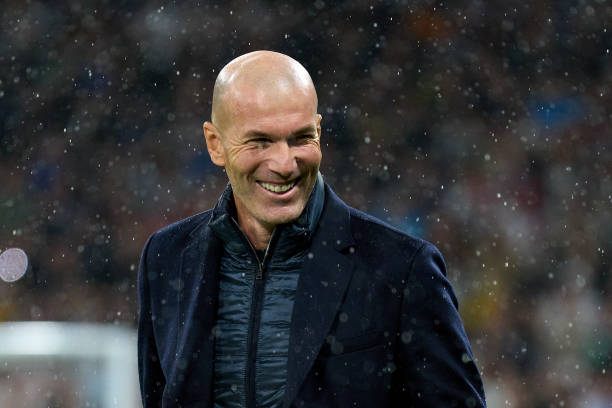
MADRID, SPAIN – OCTOBER 22: Soccer legend Zinedine Zidane has rejected an offer to coach the USMNT. (Photo by Angel Martinez/Getty Images)

The Allure, Part 1: Major Tournaments

With all due respect to Zidane, this would have been an incredible chance for him.

The USMNT head coach position provides a unique opportunity. The team finds itself in the midst of a true resurgence after qualifying for their first World Cup in eight years. On top of that, the team defied expectations and made it out of their group. While they were beaten by the Netherlands in the round of 16, it was still a big accomplishment for a team with only one World Cup veteran.

Last year’s World Cup was only the beginning, as the USMNT has plenty of opportunities to improve themselves before the next World Cup in 2026–which just so happens to be in the U.S., Canada and Mexico (more on that later). Between now and then, there are two Gold Cups, two Nations Leagues and, according to some rumors, a Copa America. The USMNT captain himself, Tyler Adams, hinted that the U.S. would be participating in the quadrennial tournament between the South American national teams. While it has still not been confirmed, participation in this tournament would give the USMNT some great experience heading into the 2026. Additionally, while the U.S. has participated in and hosted this tournament, it has never won it. The new head coach would have the chance to lead the U.S. to a major tournament win.

While the Gold Cup and Nations League both exist, neither of these tournaments are on the same level as the Copa America. While it would be nice to win them, these events provide more of an opportunity for fringe or second-choice players to get some playing time; let’s not forget the lineup that Gregg Berhalter used in the 2021 Gold Cup Final against Mexico.

The Allure Part 2: Mining Untapped Potential

On top of the allure of some major tournaments, the USMNT head coach position offers the opportunity to cultivate a new generation of great players. Sure, the U.S. has its big stars like Christian Pulisic, Weston McKennie, Matt Turner, Tyler Adams, etc. However, now more than ever, the U.S. has a plethora of young players (both at home and abroad) who could really make an impact going forward.

Brenden Aaronson featured at the World Cup last year but what about his brother, Paxten Aaronson, who just completed a move to Eintracht Frankfurt? What about Gaga Slonina, the young goalkeeper who recently made his much-anticipated move to Chelsea? Let’s not forget about MLS standouts Brandon Vazquez, Paxton Pomykal and DeJuan Jones, all of whom have played well with their respective clubs. Lastly, you have young players like Diego Luna, Caden Clark, Kevin Paredes and Jack McGlynn (just to name a few), who could all be important contributors by the time 2026 rolls along.

The new USMNT coach would have the privilege of shaping the team to their liking with a large pool of players to choose from. The coach could give different players the opportunity to make a difference with the senior national team, providing some much-needed competition for certain roles/positions. In other words, the new coach would be crucial in developing the next generation of great soccer players.

The Allure, Part 3: Making Waves in 2026

If the new head coach does their job correctly and efficiently, the USMNT will have a serious chance to make some waves when the World Cup comes home in 2026. Between some major tournaments to build on and a large group of rising stars, 2026 could be the year where it all comes together.

The next head coach could cement themselves in U.S. Soccer history, both on the field and off.

On the field, the USMNT will look to improve on their 2022 World Cup campaign, hoping to make it past the round of 16. Even though the format will most likely be different with the addition of 16 more teams (bringing the total to 48), the USMNT will be looking to put on a good performance for their home fans. The farthest run for the U.S. at the World Cup came all the way back in 1930–the first-ever World Cup. They made it all the way to the semifinal, losing to Argentina. Another semifinal appearance could be in the works here.

Off the field, a strong USMNT run would help grow the sport in the country. Remember, when the U.S. last hosted the World Cup in 1994, it jump-started MLS in 1996 with just ten teams. Fast-forward to today and MLS has 29 teams, with St. Louis City SC starting its inaugural season this year. With the commissioner having set the bar at 32 teams, there will be even more areas of the U.S. covered by the time 2026 comes along–and that’s not even counting lower-division teams.

If the USMNT make an incredible run, soccer culture in the U.S. would explode. Imagine being the head of a team that single-handedly changes the way an entire country views soccer? That’s what the head coach position entails.

Conclusion

Sure, there are other positions around the world (both at the club and the country level) that offer great rewards and great opportunities. But, objectively, the USMNT head coach position is one of the most alluring.

With an important four years coming up before the 2026 World Cup, the new USMNT head coach would have the opportunity to elevate this team to one of the best in the world. There is no shortage of talent, no shortage of players playing abroad, an established team of stars and a country hungry for a competent soccer team. With four years at the new head coach’s disposal (and a couple important tournaments), they could lay the groundwork for U.S. soccer culture to come. Dramatic as it may sound, there is a plethora of opportunities for this young and hungry national team.

All they need is the right person to lead them to glory.
Featured

2022 World Cup Qualifying Preview: Where do the U.S. Stand in their Long-Awaited Return?

It’s been a long time coming but I’m back and (hopefully) better than ever.

While I was gone, the USMNT made it back to the World Cup! They finished third in CONCACAF World Cup Qualifying after losing their final game to Costa Rica 2-0. Canada finished in first, Mexico finished in second and Costa Rica finished in fourth–meaning they’ll have to play New Zealand to decide who makes it to the tournament.

It was far from perfect but the US found a way to take care of business at home and earn their spot on the world’s biggest stage in Qatar.

But where do they stand in their grand return? Who will they play and what are their chances of making waves at their first World Cup since 2014?

Group Overview

On Friday, April 1st, the 2022 World Cup Draw was held to determine the groups for the tournament. Despite finishing in third, the US were put in Pot 2 based on their FIFA ranking–along with Mexico. Funnily enough, Canada were placed in Pot 4 despite their first-place finish in qualifying.

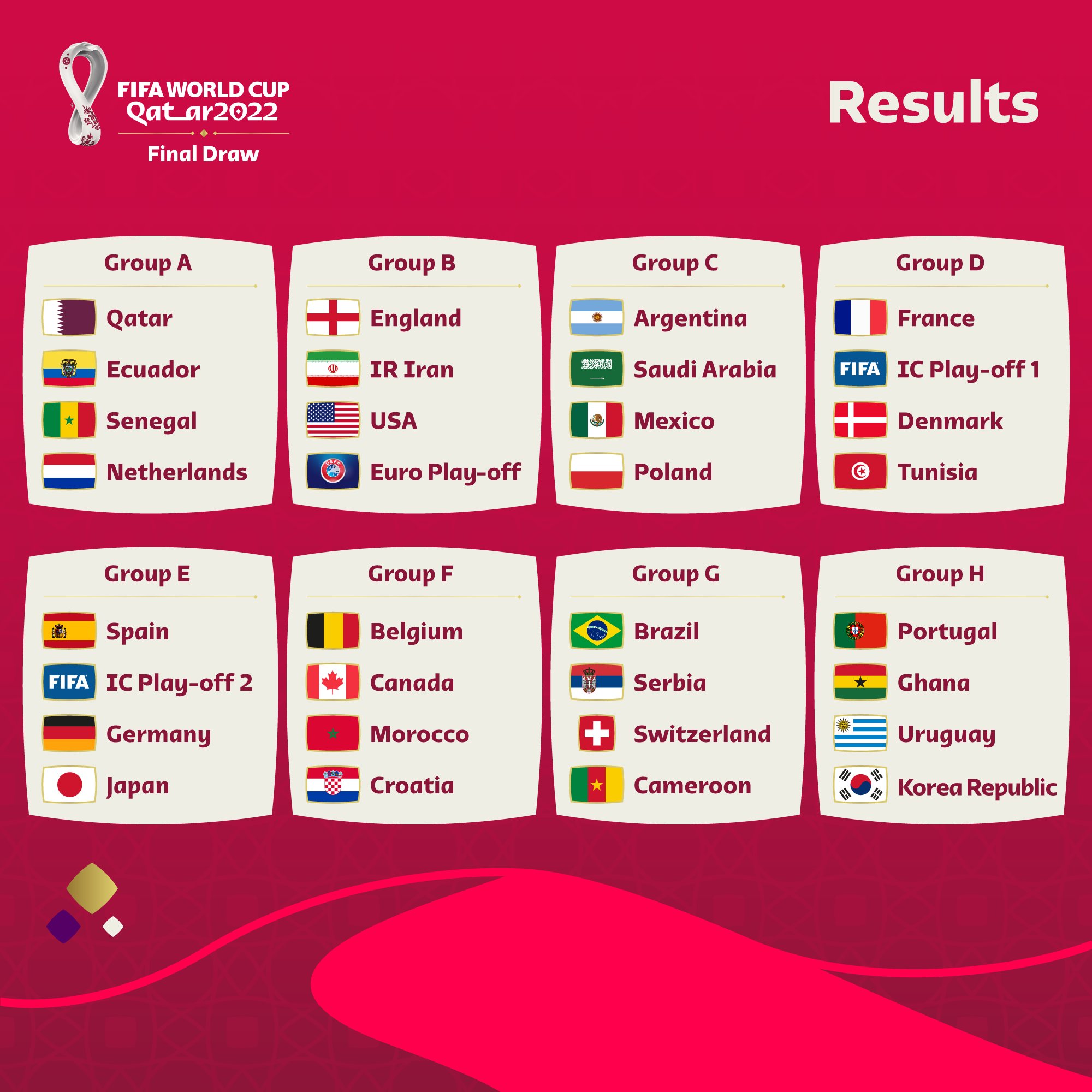
Here are all the groups:

The 2022 World Cup groups–including some spots that have yet to be determined.

There’s a lot to unpack here, including some teams/spots that have yet to be determined. For one, there is the Euro Play-Off. Ukraine were set to play Scotland back in March but because of the war, their game has been postponed until June. The winner of that game will play Wales, with the winner qualifying for the tournament. Next are the two Intercontinental Playoffs. The first one will be see either Australia or UAE face off against Peru while the second one will see Costa Rica face off against New Zealand.

What I like about this draw is that lack of a standout “Group of Death.” Each group has an exciting mix of teams that will sure to make this an entertaining tournament. My favorites include Group B, C, F, G and H.

Of course I had to mention Group B. The US have found themselves in an interesting group–one that could have been a lot worse but is not terrible. It certainly won’t be easy, but I think the US might have a chance. Let’s dive in by going in the order of games.

Game 1: Monday, November 21st against Ukraine/Scotland/Wales

What a way to start the tournament off for the US. An opening-day matchup against a European team to baptize this young American team by fire. While their opponent should have been decided by now, unfortunate circumstances have changed that.

If I’m the US, I’m hoping for Scotland. Of these three teams, they are the lowest ranked at 39 (Ukraine are 27 and Wales are 18). They have not qualified for the tournament since 1999, a tournament that saw them draw one game and lose two others to finish bottom of their group. Their last tournament was the 2020 Euros–which saw them underperform yet again and finish bottom of their group. Despite all this, they are 6-0-1 in their last seven World Cup Qualifying games and have drawn their most recent two friendlies. While they do have strong players in Kiernan Tierney of Arsenal and Scott McTominay of Manchester United, they are overall the weakest of these three teams.

Ukraine is the next highest of the three teams. They are obviously in a less-than-ideal situation because of Russia’s invasion. However, when they do return to play Scotland in June, they will most likely be even more inspired to play well and succeed. Furthermore, if they make it to the World Cup then I can imagine them being a fan-favorite. As for their history, they only have one previous World Cup appearance; they qualified in 2006 and made it all the way to the quarterfinals, beating Switzerland on penalties before losing to eventual champions Italy. In the 2020 Euros, they also made it to the quarterfinals after beating Sweden. Their talisman, Andriy Yarmolenko of West Ham United, will surely lead the way for his team.

The US’ worst-case scenario is Wales, a team full of talented players and one big-time game-changer: Gareth Bale. Even though he hasn’t featured much for Real Madrid this season, he is still arguably the best player for his national team. With 33 goals in 99 games (including a game-winning brace in their most recent play-off game against Austria), his health and form is crucial for Wales’ success in Qatar. Their lone World Cup appearance came back in 1958 when they made it to the quarterfinals. More recently, they made the last two Euros (their firsts) after years of missing out. In fact, in their first-ever tournament, they made a Cinderella run to the semi-finals where they lost to Portugal.

Game 2: Friday, November 25th against England

US fans wanted it and now they got it. Even though a game on Thanksgiving would have been even more poetic, Black Friday isn’t too shabby either.

This will be the biggest test for the US. England are a top-tier European team, sitting at #5 in the FIFA rankings. They finished at the top of their qualifying group, automatically qualifying for the tournament with a record of 8-2-0. All of this comes after their superb run at the 2020 Euros which saw them lose to Italy in the final. They have talent and depth up and down the roster with a good blend of youth and experience. They have a 29-21-19 record in 69 World Cup games, having won in 1966 and, more recently, having finished in fourth in 2018.

Game 3: Tuesday, November 29th against Iran

To me, this is the most intriguing of all the games in the group. While some people may write off Iran, I think it is a mistake. They are the highest ranked team from the Asian Football Confederation (AFC) at 21, having finished at the top of their group in qualifying by going 8-1-1. They have qualified for the World Cup six times, including five of the last seven tournaments (including this year’s edition). While they have never gotten out of the group stage, they have had more success in the AFC Asian Cup. In 2019, the most recent edition, they reached the semi-finals. However, they did win three consecutive cups from 1968-1976. In Qatar, they will look to make use of their relative home-field advantage to cause problems within the group–especially if Sardar Azmoun is healthy. He has 39 goals in just 60 appearances, including ten in qualifying.

It’s interesting to note Iran’s last game against the US in a World Cup. It occurred in 1998 during the group stage and during a time of tension between the two countries. Iran ended up winning 2-1–their first win in a World Cup.

Predictions and Thoughts

As I said before, I would say this is a middle-ground group that could go either way for the US. It could’ve gone a lot worse for them but thankfully I see a way out for them.

Then again, it all depends on who makes it from the European Play-Off. Whoever makes it from those three teams will certainly dictate the overall difficulty of the group. Additionally, not knowing who the final team is makes it hard to make predictions.

With that being said, here’s my prediciton:

  1. England
  2. Euro Play-Off
  3. US
  4. Iran

England are the clear favorites of the group, hence why I have them in first. After that it gets fuzzy and difficult to predict. What I will say though is that I have the US in third for a reason; their inexperience at a high level worries me, including some positional issues that, while they could change between now and then, are worrying (I’ll go into them soon). It is important to note that they are the youngest of all the teams and I think just qualifying is a success in itself. Getting out of the group stage would be an even greater success but I wouldn’t be surprised if they didn’t.

But to be honest, I don’t think it matters. After the disaster from the last World Cup cycle, the USMNT and US fans should just be thankful that they have something to look forward to and a team to cheer for. However, anything can happen in a World Cup so I’m not counting them out just yet.

So, in the meantime, prepare for what will be a whirlwind, entertaining tournament. Get your jerseys ready, your flags ready and, most importantly, “your basements ready.”

Trouble at the Top: The USMNT’s Other Problem Heading Into Qatar

In my one of my most recent posts, I discussed the USMNT’s goalkeeper problem as they prepare for the World Cup in November. In brief, there are a lot of options, but not one of them is ideal–for now.

However, this isn’t the USMNT’s only problem. The other problem lies at the other end of the field: forward. As it stands, the USMNT does not have a Jozy Altidore, Clint Dempsey or Landon Donovan-type forward who consistently scores goals. In fact, the situation is almost the complete opposite; plenty of players but not one person consistently scoring. While there are some good options, no one stands out like any of those three names.

Let’s take a look and see where the USMNT stands, starting with the strongest contenders and going down.

Jesus Ferreira

Based on the most recent USMNT roster and the past two games, Jesus Ferreira seems to be Gregg Berhalter’s preferred option at this position. Ferreira isn’t a typical center forward. Rather, he’s more of a false nine–a forward who consistently moves towards the midfield to help with distribution rather than staying up front. By moving deeper into the midfield, the false nine can disrupt the defense and send the wingers further forward. If the false nine is successful, he can then run back upfield towards his more natural position.

In any case, Ferreira is just 21 years old, playing for FC Dallas in MLS. After inking a new deal over the most recent offseason, he has responded with nine goals and four assists on 14 matches–tied for the league lead in goals with fellow American Jeremy Ebobisse. For the USMNT, he already has three goals in just 11 appearances.

However, as many fans noticed in the USMNT’s most recent game against Uruguay, Ferreira is not the best finisher. He is able to find and create chances but he is not always able to finish them–something a team obviously looks for in their striker. Chances are chances but goals are goals. While he has been performing on the club level, he hasn’t been able to transfer that to the international level. Despite that, at least for the time being, he seems to be Berhalter’s go-to guy.

Josh Sargent

At one point, Josh Sargent was regarded as The Next Big Thing; he was one of the USMNT’s top prospects–not only in general but also at the forward position. He parlayed his potential into a move to Werder Bremen, a well-known team in the German Bundesliga. In 2018, with Bremen’s second team, he had seven goals in 12 appearances.

Since then, however, things have not gone smoothly for the young American. With Bremen’s senior team, he had just 15 goals in 83 appearances over the course of three years. In fact, over the course of the 2020-2021 Bundesliga season, he had more yellow cards than goals scored. He ended that season with five goals, two assists and seven yellow cards.

Bremen were relegated to 2. Bundesliga after that season, and instead of staying and proving himself in the lower league, he decided to jump ship and head to the Premier League with the newly-promoted Norwich City. It was an $11 million deal for the then 21-year-old striker–one that he couldn’t resist even if Norwich City are constantly being promoted and relegated.

In his first season with Norwich, Sargent scored just four goals in 29 appearances with two of those coming in the Premier League. Even though one of those is highlight-reel worthy, it was not the production that many fans had hoped for. To make matters worse, 1) he has played as a winger for Norwich, not as a center forward and 2) Norwich have been relegated once again after finishing last. While a move down to the Championship may help him out, it remains to be seen if he can regain some consistent form. He’ll have a little bit of time to score some goals before the World Cup but who knows? He has not scored a goal for the USMNT since 2019.

Ricardo Pepi

It seems like just a few months ago that fans were singing Ricardo Pepi’s praise and many people (myself included) had him as THE heir apparent to all of the great U.S. strikers before him.

My word, how quickly his stock has fallen over the past couple of months.

Pepi, 19, erupted onto the scene after a great 2021 MLS season that saw him score 13 goals in 31 appearances for FC Dallas and win MLS Rookie of the Year. His stock rose so quickly that European teams (and the USMNT) started monitoring his progress. Ultimately, Pepi decided to make a move to FC Augsburg in the Bundesliga for $20 million, as the team looked to avoid relegation. Even though they succeeded in staying up, it came at Pepi’s cost; in 11 appearances since the start of this year, he scored zero goals and provided zero assists.

For the USMNT, prior to his move to Germany, he was lighting up the scoresheet. In six World Cup Qualifying games, he had three goals and three assists, including a brace against Jamaica. Since his move to Germany, however, his international form has struggled as well, leading Berhalter to exclude him from this summer roster.

Pepi is still just 19 years old, so he has plenty of time to regain his form both for club and country. But for right now, with the World Cup coming later this year, he might not be the primary option. Staying in the Bundesliga will be helpful for him but he will have to work hard and clear any mental hurdles he might be facing.

Daryl Dike

With Daryl Dike having been out with an injury since the beginning of this year, it is easy to forget about him on the USMNT depth chart. However, I wouldn’t count him out completely. At just 22 years old, he is yet another young player who could end up making waves.

Dike started with Orlando City SC in MLS, scoring eight goals in 22 appearances over the course of a year. From there he went on loan to Barnsley, a team in the English Championship. Over half of a season (22 games), he scored nine goals and almost helped them to the Premier League.

He took that experience back to Orlando City when he returned on loan. In half of a season back at his old club, he scored 11 goals in 19 appearances–much higher than before he left. This strong streak culminated into another European move–this time on a permanent deal. West Bromwich Albion of the Championship signed Dike to a four-and-a-half year deal for $9.5 million. However, after just two games with them, he suffered a hamstring injury that has kept him out.

He does have some national team experience with three goals in eight appearances. Despite this, he’s been out for so long that his stock has fallen. If all goes well, he might have some time to prove himself before Qatar. However, I have a feeling it might be too late at that point or that he won’t have enough time. Again, anything can happen but for this year his chance may have passed.

Tim Weah

This is a little bit of a wild-card pick. Tim Weah, the 22-year-old who plays with Lille in France’s Ligue 1, is primarily used as a right winger for both club and country. However, he does have experience as a center forward.

The reason why I have him here is because the USMNT has a plethora of talented forwards and wingers. When the World Cup comes along, if all of these players are healthy, Berhalter may not have a choice but to play Weah up top if he wants all of them in the same lineup. To clarify, I’m talking about Weah, Christian Pulisic, Gio Reyna and Brenden Aaronson.

In this scenario, Pulisic is best on the wing so you would put him on the left side. Aaronson and Reyna could go on the other wing or in the midfield so you could interchange them. That leaves Weah, who has had experience as a center forward. On top of that, Weah can score goals. He had three goals and four assists this past season with Lille and he has three goals in 24 appearances so far with the U.S.–including most recently against Morocco. The downside is that he does not score that often. That could certainly be different he played as a center forward more often but I think the USMNT needs someone who can consistently put balls in the back of the net. Still, it’s not entirely out of the equation.

Alternative Options

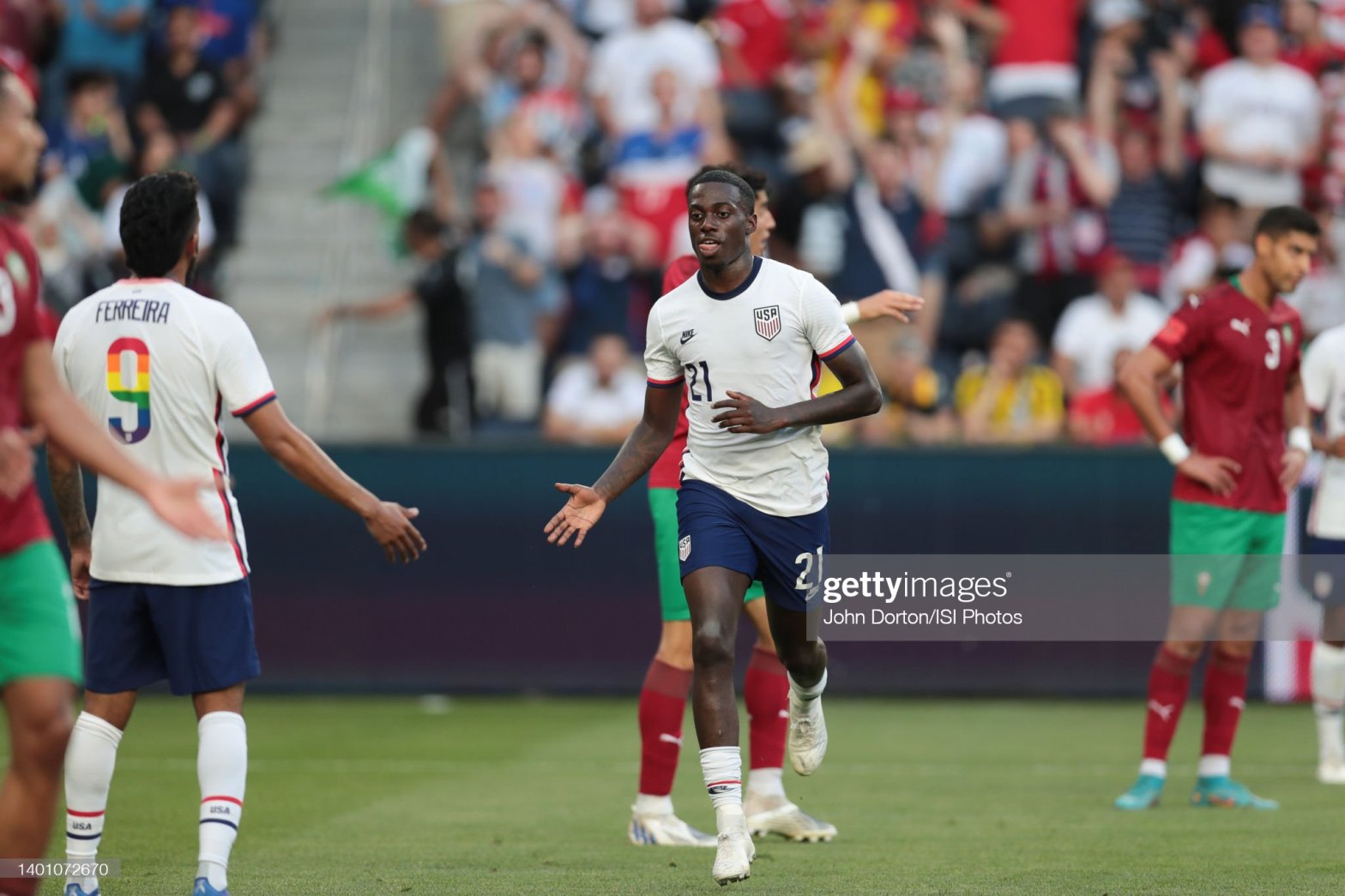
Haji Wright: I think I can speak on behalf of a lot of USMNT fans when I say that until recently, I had forgotten about Wright. I remember when he was on Schalke 04 with fellow American Weston McKennie but since then? I had not heard of him. However, after an impressive finish to the most recent Süper Lig season with Antalyaspor (including a stretch of seven straight games with a goal), Berhalter decided to call him up for the current international window. Pulisic gifted him a penalty in the first game against Morocco but he did not score against Uruguay. Hopefully, he can use the next two Nations League games to build some more momentum and increase his chances of getting called up in November.

Gyasi Zardes: U.S. fans love to bash him on Twitter but Zardes has experience that the USMNT could use when the World Cup arrives. He has 14 goals in 68 appearances for the U.S., including some in last year’s Gold Cup campaign. However, he did not score at all during World Cup Qualifying and, despite having just been traded from Columbus Crew SC to the Colorado Rapids, he is in a little bit of a rough patch (two goals in 13 matches so far). Even though anything can change in an instant, Zardes might be finished with the U.S.

Jordan Pefok: Pefok is the perfect example of a player whose club form doesn’t translate to the national team. He plays for BSC Young Boys in Switzerland’s Super League, the top league in the country. With 22 goals this past season, he was the league’s top scorer. However, he was unable to score in three World Cup Qualifying appearances, including 83 minutes against Canada. In fact, in nine appearances for the USMNT, he only has one goal. Granted, this is a small sample size but I think if Berhalter believed in Pefok then he would have called him up for this window.

Who Makes the Cut?

Unless something miraculous happens between now and November, I think it’s Ferreira’s job to lose. One of the benefits to him playing in MLS is that he’ll have the rest of the summer to play, whereas any of the players in Europe won’t start their seasons until around August. This will give Ferreira more time to hopefully improve his finishing and fine-tune other aspects of his game.

Behind him, I think Weah is the best option. He has played as a forward before during his career and, as I said before, I think playing him would allow the U.S. to put their best team on the field. Additionally, with only so many roster spots for the World Cup, versatility is key. Having players that can play multiple positions could lead to other players being called up for the tournament.

As for Pepi, Sargent and Dike? Their time will come. With this year’s World Cup coming up so quickly, I don’t think they will have enough time to play their way onto the roster. Despite this, they are all young. They will have their chance to play for the U.S. and prove their worth. For now, they should focus on getting healthy and, in Pepi’s case, getting acclimated to a new team in a new league.

Hopefully, once the World Cup comes to the U.S. (as well as Canada and Mexico) in 2026, all three of these players will be ready to dominate and help the USMNT defend their turf. Until then, it’s a waiting game.

Breaking Down the USMNT’s 27-Player Roster for June Games

Gregg Berhalter, the head coach of the USMNT, has had a fair share of ridicule and praise. On one hand, fans question his call-ups, lineup choices and in-game substitutions. On the other hand, he has done well to qualify for the World Cup and win both the Gold Cup and Nations League.

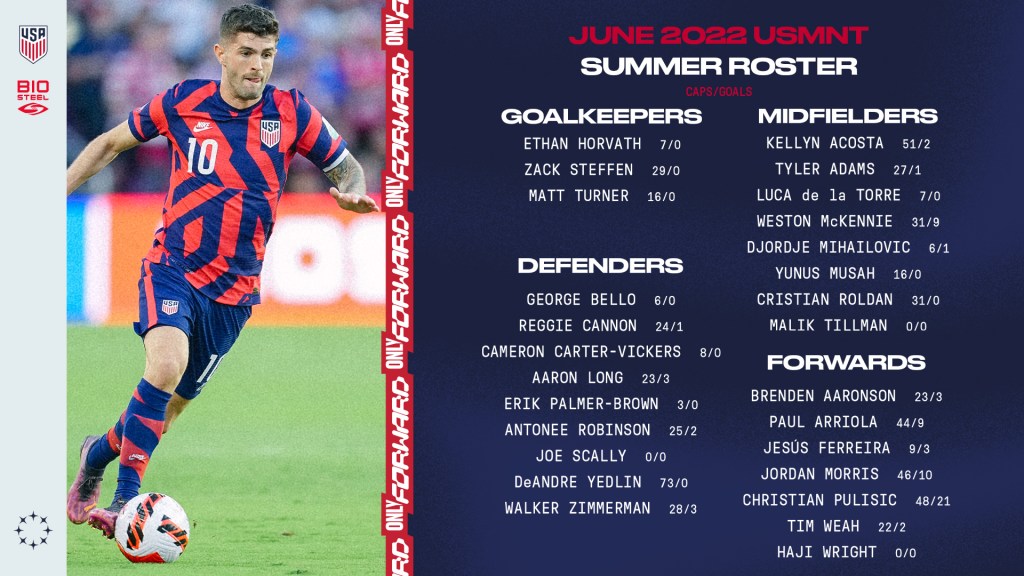
Last week, Berhalter released the group of 27 players he’ll take for a group of matches in June. Two of them (June 1st and June 5th) will be friendly matches at home against Morocco and Uruguay, respectively. These, along with two CONCACAF Nations League matches (June 11th and June 15th) against Grenada and El Salvador respectively, will help the USMNT prepare for the World Cup. It’s an essential group of games that will give Berhalter insight into who is ready and who isn’t ready to make the trip to Qatar.

This roster is full of shoe-in choices for the World Cup but also some fringe players who could play their way in. Let’s take a look.

The USMNT’s June roster from their official Twitter page

Goalkeepers

As with most international windows, Berhalter decided to go with three goalkeepers. However, there are no surprises here. Despite the concern about their playing situations, these are arguably the three best goalkeepers in the USMNT pool.

The question here: who will start? Do you reward Matt Turner for his work during World Cup Qualifying and start him all four games or at least the more difficult friendlies? Do you stick with Zack Steffen despite his lack of playing time? Do you give Ethan Horvath one or both of the Nations League games to rest the other two players? While there are plenty of possible outcomes, I predict that Turner will start all four games with Steffen maybe starting one of them to rest Turner. Despite his upcoming move to Arsenal, I still think Turner is the best option and he more than proved himself during qualifying. Also, at this point, I think Horvath is the certified third-choice goalkeeper behind the other two.

It’s important to note that Gabriel Slonina, who just committed to the U.S. over Poland, is not on this roster. I’m not too surprised at this not only because of his youth but also because of his recent dip in form. Now that this decision has been made, I think he should focus on himself and look for new ways to improve; he will get called up eventually.

Defenders

The injury to Miles Robinson has opened the floodgates for other center-backs to make their case to start in the World Cup. Walker Zimmerman, a pencil-in for one of the spots, gets the call-up to work with the others and to see with whom he pairs the best.

Aaron Long, Erik Palmer-Brown and Cameron Carter-Vickers are all in the running to pair with Zimmerman, especially with another option, Chris Richards, injured as well. All three of those options have some case to back them up. Long has been solid for the New York Red Bulls in MLS, dodging an injury scare early in the month. Palmer-Brown plays for French club Troyes in Ligue 1, starting their last nine games and helping them stay out of relegation. Carter-Vickers, playing for Celtic in Scotland, has featured 45 times and scored four times, helping them win the Scottish Premiership. Both he and Palmer-Brown’s seasons started as loans but they’ve both recently extended their contracts to stay longer.

There are four games, so realistically Berhalter can pair each of them with Zimmerman for a game. However, I wouldn’t be surprised if Zimmerman is rested at some point. In any case, there are plenty of combinations that can be made and Berhalter has the games to make them. One has to wonder, however, where John Brooks stands in all of this…

There aren’t many surprises among the full-backs. Segiño Dest is out with an injury so other players are getting reps–most notably the young Joe Scally, an NYCFC academy product now playing in Bundesliga with Borussia Mönchengladbach. At just 19 years old, he made 33 appearances across competitions this past season, netting one goal and two assists at both left-back and right-back. That versatility is an excellent quality, especially with the limited number of spots on the World Cup roster. Fans have been eager to see Scally be called up and his time has come. I hope to see him get at least one start.

Midfielders

There are two big surprises here; one that’s long-awaited and one that is completely new.

The first is Djordje Milhailovic, the 23-year-old midfielder playing for CF Montréal in MLS. He has had an excellent start to the season so far, with seven goals and three assists in 13 matches. While he has one goal in six appearances for the USMNT, it has been a while since he was last called up (December 2020). I’m glad that Berhalter is seeing Milhailovic’s hard work and rewarding him with a call-up. If all goes well, he could parlay a good international window and MLS season into a European move or even a World Cup roster spot. For now, however, I’m eager to see him start at least one or two of these four games.

The other big surprise is Malik Tillman. I’ll be honest, I had no idea who he was when I first saw the roster list. However, Berhalter, who is known for his recruitment of dual-nationals, found this young German-American and decided to give him a chance. Tillman has featured for both the German U-17 and U-21 teams, so he has experience with them. Despite this, he is supposedly looking to make a one-time switch to represent the U.S. In any case, Tillman plays for Bayern Munich in Germany where he made seven first-team appearances this past season. When he’s not playing for the first team, he’s playing for the reserve team. There, in the fourth-tier of German soccer, he had four goals and four assists in 15 appearances. I would be surprised if the 19-year-old started any of the four games but I hope he gets plenty of time as a substitute.

Forwards

Out of the seven players listed in this category, only two of them are traditional central forwards: Jesus Ferreira and Haji Wright. For a team with a problem up front, I’m surprised Berhalter hasn’t called up other forwards to take a crack at the spot. However, with Josh Sargent and Ricardo Pepi both struggling at their respective clubs and Daryl Dike still injured, I’m not surprised either. Berhalter seems to be putting all his eggs in Ferreira’s basket and seems to wholly trust him. A good set of games for him could cement his place on the World Cup roster, especially with his hot start to the MLS season with a league-leading nine goals in just 13 games.

Even though guys like Christian Pulsic and Tim Weah can play in that forward role, both of them are more natural wingers. In fact, everyone but Ferreira and Wright plays as a winger. The USMNT has a lot of depth at that position, so this might be a chance to test them and see who is best ready for the World Cup.

Going back to Wright, I am surprised to see him here. While he has featured for the U.S. youth teams, he has yet to feature for the senior team–with this being his first call-up. Wright currently plays for Turkish club Antalyaspor in the Süper Lig on loan from Danish club SønderjyskE. He had 15 goals and two assists across all competitions this past season, including a span in which he scored in six straight matches. While it’s hard to say where he’ll end up come World Cup, he could parlay some good stretch of games and goals into a roster spot. That just goes to show how open the race for the #9 spot is for the USMNT.

Predictions/Conclusions

This is definitely an interesting group of players, with both veterans and newbies alike. The priority of this window should be prepping players for the World Cup, building coherency and giving opportunities to players to play and possibly build their stock. With that and the schedule of games in mind, let’s try to predict some starting lineups.

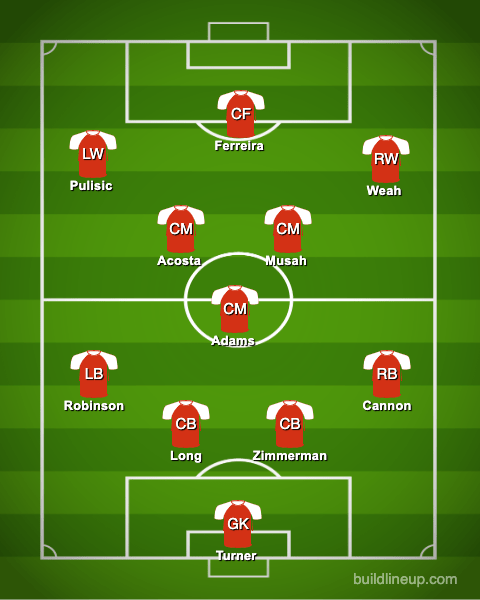
Game 1: U.S. vs Morocco

I think Berhalter is going to come out strong against a team like Morocco, who have also found themselves in this year’s World Cup. They are ranked 24th in the world by FIFA and have a good set of players–including PSG’s Achraf Hakimi. Nothing really shocking/crazy different here, except I purposely left out Weston McKennie as he just returned from injury. Weah gets the start with some good form from Ligue 1 and I can imagine anyone else in for Long as I’m sure they will be rotated. Lastly, I wouldn’t be surprised if DeAndre Yedlin started over Reggie Cannon but I’m saving him for the next game.

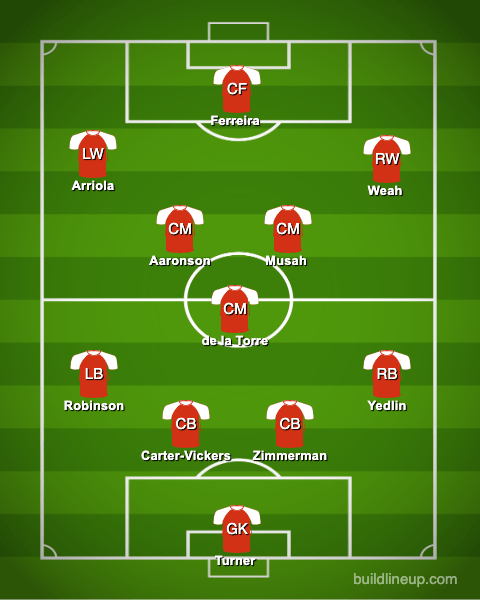
Game 2: U.S. vs Uruguay

With only four days between these games, I think there will be some rotation in the squad. I put Yedlin and Paul Arriola for some more experience against the better team and I put Brenden Aaronson in because I think Berhalter will see how he fares against a tougher team. I took Tyler Adams out because of his injury history and put Luca de la Torre to get a good test–although I could see Kellyn Acosta starting again.

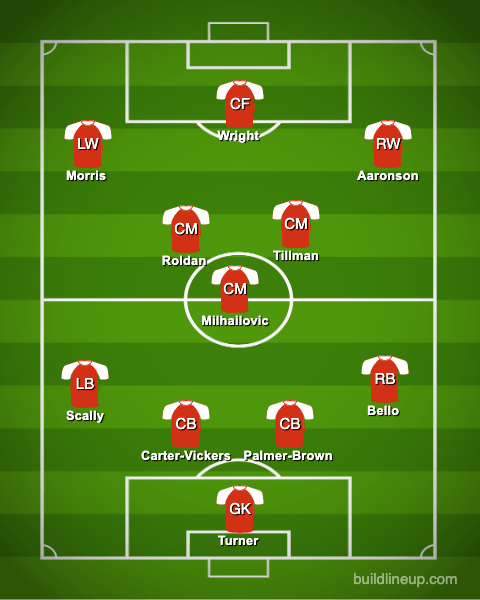
Game 3: U.S. vs Grenada

Grenada are ranked 170 in the FIFA rankings so that should tell you all you need to know. Considering that this game is at home, I expect Berhalter to go with a fully-rotated lineup–even though this game takes place almost a week after the Uruguay game. I think this is the perfect opportunity to play some of the fringe players, which is why I have Wright up top, Scally at left-back and Milhailovic and Tillman in the midfield. Zimmerman gets to rest so he can play away against El Salvador and, even though I have Cristian Roldan in, I can see McKennie getting the start as he eases into playing action.

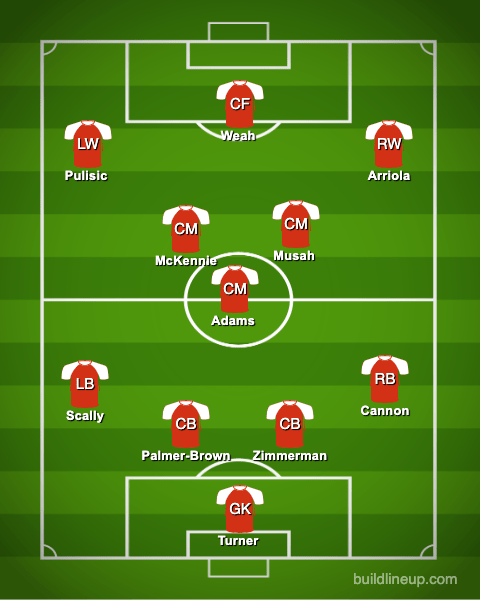
Game 4: U.S. vs El Salvador

Playing on the road in CONCACAF, no matter the competition or occasion, is always tough. Case in point, the USMNT only won one of their seven away games in this past World Cup Qualifying cycle. With that in mind, I altered the lineup, opting to go with some experience. Palmer-Brown gets the opportunity to test his chemistry with Zimmerman, Weah gets the opportunity to see how he does as a #9 and I chose this game to have Yunus Musah, McKennie and Adams all in the midfield as I think the three of them need to start at least one game all together. Other than that, I can see Robinson starting instead of Scally.

Regardless of who Berhalter decides to go with for these games, I think this will be an exciting window. It will give the U.S. some decent competition to test themselves while also opening the door for some players to make a big impression. Additionally, there will only be one other FIFA international window after this one before the World Cup. In September, the U.S. will have time for just two more friendlies before they head to Qatar. That makes this window that much more important not just for Berhalter but for all the players who have been called up.

The USMNT know they are going to Qatar and who they will be coming up against when the time comes. It’s time to start putting in the work and making things happen.

Pressure Between the Pipes: The USMNT’s Problem Heading Into Qatar

Tim Howard. Tony Meola. Brad Friedel.

Three US goalkeeping legends who all made their impact on the program and led their respective teams in the FIFA World Cup. All three of them were top-choice players who played well and consistently.

Flash-forward to today and the situation is–complicated. There is no longer a first-choice, clear-cut contender to be the starting goalkeeper in Qatar for the 2022 World Cup. Instead, there is a group of contenders, each with their own pros and cons. While most of the attention is going towards the USMNT’s lack of a clear-cut #9, this problem between the pipes is just as bad–if not even worse.

Let’s take a look at the different options and their current situations, starting from the better/more-likely options and going down.

Zack Steffen

After the disaster of the last World Cup Qualifying cycle, most of the “old breed” of players left the program. One of the biggest names in this contingent was Tim Howard, the longtime goalkeeping stalwart of the USMNT. Once he departed, there was a power vacuum at that position.

So most people looked at Zack Steffen, a young goalkeeper making waves for Columbus Crew SC in MLS. He was 23 years old at the time, starting on a consistent basis. At the end of 2018, he agreed to a move to Manchester City that was finalized in July of the next year. He was immediately loaned to Fortuna Dusseldorf in the German Bundesliga. There, he made 18 starts, most of which came early in the season before he was bogged down with injuries. He couldn’t return for the end of the season, Dusseldorf were relegated and he had no choice but to return to Manchester City.

He has been there ever since, signing a new contract to keep him there for a while. The only problem is that he is a backup, playing behind one of the best goalkeepers in the Premier League: Ederson Moraes. Steffen has mostly been on the bench, only getting the occasional start in the UEFA Champions League and the FA Cup. Most recently, he had a dreadful game against Liverpool in the FA Cup Semi-Final. It was not a good night for him as Manchester City lost 3-2.

For his country, Steffen has featured 29 times, most recently in the final game of World Cup Qualifying against Costa Rica. The US lost that game 2-0, as Steffen was responsible for both goals. It was a microcosm of his qualifying cycle, one in which was less than ideal for the de facto primary goalkeeper. He split the load with fellow ‘keeper Matt Turner (more on him later), starting six of the 14 games. His numbers were–not that good. Combine these numbers with his recent performance for Man City and you have a bad situation. While you could argue that being on an elite team must be doing wonders on Steffen, the lack of consistent playing time is worrying and it shows.

Unless he can secure a loan before the start of the World Cup and get some consistent playing time, I wouldn’t automatically place him as the #1 goalkeeper. There are rumors that he has started to look for a loan so let’s hope he can make it happen.

Matt Turner

It was a qualifying tournament to remember for the New England Revolution goalkeeper, who played quite well and contributed to the USMNT’s success. Matt Turner has been making a name for himself in MLS, going so far as to winning Goalkeeper of the Year and the Supporter’s Shield in 2021. He is 27 years old and has been with the Revolution since 2018, making 107 appearances so far.

His consistent playing time for both club and country has shot him up the playing pool, causing many people to prefer him over Steffen. In addition to doing well in World Cup Qualifying, he played an important role in the USMNT’s Gold Cup-winning campaign last year–including a shutout against Mexico in the final.

Having recently returned from an injury with a shutout against Inter Miami CF, things seem to be going up for Turner. However, there is some room for concern when it comes to his role with the national team. Back in February of this year, he signed a deal with Premier League club Arsenal for $6 million. The deal keeps Turner in MLS until the summer, at which point he will move to England. While this may be a dream move for him (he is an Arsenal fan himself), it does not bode well for his national team career. Young Aaron Ramsdale is currently the Gunners’ primary goalkeeper with Bernd Leno as his backup. Even if Leno is sold, there is a good chance that Turner will just take his place as Ramsdale’s backup. That would leave the USMNT with their #1 and #2 goalkeepers sitting on the bench at their respective clubs.

It’s not an ideal situation for the USMNT, who will be looking to make an impression in their first World Cup since 2014.

Ethan Horvath

It’s difficult to pin Ethan Horvath in a certain spot on the USMNT’s depth chart. At just 26 years old, he’s still a relatively young player. However, he already has experience around Europe and while playing for the national team. He currently plays for Nottingham Forest in the Championship, England’s second-tier division. This is his first season there after four years and 64 appearances for Club Brugge in Belgium’s first division.

Even though he started for Club Brugge in both domestic league and UEFA Champions League games, his role has been relegated to backup for Nottingham Forest. From late February to mid-March of this year, he started a stretch of five games while their primary goalkeeper, Brice Samba, was injured. He only allowed two goals in that stretch and Nottingham were 3-2-0. Since then, however, he has only started one more game: an FA Cup Quarterfinal game against Liverpool that they lost 1-0.

For the USMNT, he has only faired slightly better–mostly because of the players in front of him. Since 2016, he has only made seven appearances, playing in neither the 2021 Gold Cup nor the 2022 World Cup Qualifying. In fact, his last appearance came in June of last year in the Nations League Final against Mexico. Steffen started the match but came off with an injury in the 69th minute. At that point, Horvath had no choice but to come on. The game ended up going to extra time where Christian Pulisic scored a clutch penalty that gave the U.S. a 3-2 lead. However, in the 124th minute, Horvath won the game by saving a penalty shot from Andres Guardado.

While Horvath may seem like the most natural option behind Steffen and Turner, his lack of playing time is also concerning. Even though he has performed well when he has played, there is no consistency–putting him the same boat as those ahead of him. Things could change if Nottingham Forest are promoted to the Premier League (they are currently in the promotion playoffs) but only time will tell if that would help or harm Horvath.

Sean Johnson

Behind Steffen, Turner and Horvath is where it gets murkier. There are a number of different options but none of them are ideal. Let’s start with Sean Johnson, the 32-year-old who currently plays for New York City in MLS. He has been there since 2016, making 177 appearances for them and helping them win MLS Cup last year.

For his country, he has only made nine appearances–his last one coming in February of 2020 in a friendly against Costa Rica. Since then, he has mostly been a bench player and veteran presence, winning the Gold Cup last year without having played a game. So, even though he hasn’t featured much for the USMNT, he still has familiarity with head coach Gregg Berhalter’s system and how he wants to play. However, while he has played well for club, his lack of playing time for country makes it difficult to name him as a replacement.

Brad Guzan

Brad Guzan would normally be higher up in the pool, but his recent injury knocks him off a couple pegs. Back in mid-April of this year, he ruptured an Achilles tendon. Even though he had a successful surgery not long after, he was still placed on the injured list by Atlanta United and is out for the season.

Considering this year’s World Cup starts in November, there is a slight chance that Guzan could return in time for the tournament. However, given his age, I would’t try to rush him back and risk another injury. At 37 years old and with 64 appearances for the USMNT, he is certainly the most experienced in the pool. However, he might be nearing the end of his career at this point.

Gabriel Slonina

At just 18 years old, Gabriel Slonina (possibly) represents the future of the USMNT. He currently plays for the Chicago Fire in MLS and has won the starting role. He is tied for first in the league with five clean sheets so far and is already gaining interest from abroad.

There is just one problem, though; “Gaga” might not end up on the USMNT anyway. After a photo of Slonina went viral on Twitter, reports were confirmed that he has accepted a call-up to the Polish National Team for their upcoming Nations League matches. Even though his “priority is to stay with USMNT,” anything can change. If Slonina likes his time with Poland and sees a better path forward for himself, he may commit to them. However, if he’d rather be part of the USMNT’s bright future, he may decide to just stay with the U.S. Regardless of what he decides, it is a little worrying that Poland is trying to recruit him. As one of five goalkeepers on that Polish roster, it’s hard to see him get any playing time. Even if he doesn’t, he’ll surely be building relationships with the other players and least getting a feel for their style.

In any case, Slonina is still extremely young. Despite his consistent playing time for the Chicago Fire, it’s hard to imagine him being the USMNT’s starting goalkeeper for the World Cup later this year.

Alternative Options

Bill Hamid: Hamid is 31 years old, making him a veteran out of this group of players. He has spent most of his career so far in MLS with D.C. United, aside from brief stint in Denmark with Midtjylland in 2018. With eight appearances for the USMNT he does have some experience there but his aspirations might be elsewhere. Back in March, he was called up by Sierra Leone for a trio of friendly matches. Even though he’s ineligible to switch federations at this point (he played in the 2017 Gold Cup), it’s still telling to see that he would accept such a call-up.

Stefan Frei: Now this is an interesting pick. Frei, the goalkeeping stalwart for the Seattle Sounders, was actually born in Switzerland before moving to the U.S. However, having spent all of his professional career in MLS so far, it seems as if his allegiance lies with the Stars and Stripes. In fact, he became a U.S. citizen back in 2017–paving the way to be a part of the USMNT. However, after being called up to a USMNT camp earlier that year, he has not been called up since. Even though he is 36 years old, he has been a huge part in the Sounders’ success and is consistently starting for them. While it would certainly be a stretch to call him up, I like the idea of having him as an option.

J.T. Marcinkowski: This one is also a long shot but it’s worth the mention. Marcinkowski, 25, is the starting goalkeeper for the U-23 Men’s National Team–a team of players under 23 years old with the exception of three players. Marcinkowski has spent his whole career with the San Jose Earthquakes, signing as a Homegrown Player before being loaned out to Reno 1868 FC and then becoming the starter for the Earthquakes. He has made 61 appearances for them so far, doing a decent job of shoring up the team’s mediocre defense. Even though a better team would probably help him upgrade to a new level, he is still getting consistent playing time.

Who Makes the Cut?

I think Turner should be the starting goalkeeper for the USMNT in November. Even though his move to Arsenal could damage his playing time, he has played consistently for the New England Revolution over the past couple of years–while Steffen has not. Additionally, it was Turner who, for the most part, helped the U.S. qualify for the World Cup. If anything, his actions should be rewarded with a starting position.

Steffen should be Turner’s backup but what about the third-choice goalkeeper? It is rare that this player ever sees action so I think the U.S. has a couple of options. Do you bring Horvath? Johnson out of respect? Slonina to further convince him to stay with the Stars and Stripes? My heart says Slonina. It’s important to always build towards the future and I think bringing him along would go a long way. It would show him how much he means to the USMNT and it would help him build relationships with other players.

In the end, however, this is all still up in the air. Anything can happen over the next six months and these players’ situations can change in an instant. Berhalter has a lot on his plate heading into his first World Cup–hopefully he can plug up this problem in between the pipes.

Outliers: Exploring the generational gaps of the USMNT through 20 years of golden boys

What one award can tell us about the state of US Soccer

Outliers have always astounded me. To see individuals, groups and phenomena rise above the rest is so interesting. Take my favorite baseball team, the New York Mets. They’re not a consistently great team and have had many seasons of mediocrity. In fact, the last time they won a World Series was back in 1986. 

That’s what made 2015, an outlier season, so special–they had a complete, competitive team that came up clutch on numerous occasions and made it to the World Series for the first time in 15 years. Unfortunately things didn’t end too well but it was still an amazing experience. 

Then you have players like Lebron James, Lionel Messi, Tom Brady, Cristiano Ronaldo and Serena Williams–all phenomenal players who have reached the pinnacles of their respective sports. They are all outliers. 

However, there are different kinds of outliers. 

It all depends on the situation and what the examples are being based on. The term itself, a term I remember learning about in elementary school math, can refer to the lowest number in a group of data. On a different note, it can be the one kid in the class who failed the quiz while everyone else aced it or the one child in a family of doctors who flunks out of medical school. 

Not all outliers are the same. 

Since 1998, US Soccer has been awarding the Young Male Player of the Year award to, you guessed it, the best young male player in US Soccer that year. Last year, Giovanni Reyna won the award after impressive performances for both club (Borussia Dortmund) and country. He made his senior USMNT earlier in the year and has notched five goals and seven assists across all competitions for Dortmund. 

What I find interesting, however, is taking a walk down memory lane. I was inspired by this tweet that shows a list of all the previous winners of the award since its introduction in 1998. The first time I looked at it and read through the names, I knew there was something to be discussed. 

From 1998-2008 there is a pretty interesting group of names. I only started following the USMNT pretty recently so names like Josh Wolff and Bobby Convey don’t inspire anything in me. Then you have USMNT greats like Landon Donovan, DaMarcus Beasley, Jozy Altidore and Michael Bradley. Lastly, you have names like Ben Olsen, Freddy Adu and Benny Feilhaber who are still recognizable names without the same pedigrees as the others. 

From 2014-2020 is a new generation, one full of hope and promise for the future. You’re looking at a group of guys playing at top or close-to-top leagues across the world. These guys are the building blocks for what’s to come. 

And then you have the outliers. 

I’m talking about 2009-2013: Luis Gil, Gale Agbossoumonde, Brek Shea, Rubio Rubin and Wil Trapp respectively. 

I don’t know how to explain it but you just look at these names and…nothing happens. You kind of just shrug and look at the rest. On top of that, when you compare them to the names before and after you can tell there’s a discrepancy–a “generational gap,” if you will. 

Before we get into the bigger picture, let’s take a look of what these athletes did to earn their awards. 

The Outliers

  • Luis Gil–2009: At 15 years old, he turned many heads for the U-17s at CONCACAF Championships and later on at the World Cup. The midfielder helped the US finish in second place in their group but unfortunately they were unable to beat Italy in the Round of 16. Even though he was the youngest player, he was still one of the best. I dug up this old ESPN article from 2010 that is a great profile of Gil and his background. Gil was wanted by myriad clubs across the pond (especially Arsenal) but he decided to stay in the US instead, ending up with Real Salt Lake via a trade by Sporting Kansas City. It’s safe to say that his reception of the award seems to be based more on potential than anything else. Sure, he did well with the U-17 but he hadn’t even played professionally yet. Even the then-U-20 coach, Thomas Rongen, showed some hesitation when he said, “‘it’s a little too early to tell’ how good Gil can be.”
  • Gale Agbossoumonde–2010: This center back was 19 when he won this award, coming off of a six-month loan that sent him to S.C. Braga in the Primeira Liga of Portugal from Miami FC. He only played six games for Miami but managed to get some time with the Braga U-19s before playing in reserve games for the senior team. Unfortunately, he suffered a season-ending injury shortly thereafter. For the US, he actually did more in 2009. That year, he played for the U-20s in the CONCACAF Championships, helping them qualify for the World Cup. Despite starting in all three games for the US in that tournament, the US failed to get out of their group. In 2010, Agbossoumonde made his first and last appearance for the senior team in a friendly against South Africa. 
  • Brek Shea–2011: Shea’s name might still ring a bell because he still plays in MLS for Inter Miami. However, he won this award for his efforts with another MLS club–FC Dallas. He began his career straight out of high school and was drafted by Dallas. While he had a nice 2010 season with five goals and four assists in 25 appearances, he followed that up with an even better 2011 season that saw him notch the same amount of assists with 11 goals. He started 30 of 31 games, was an MLS All-Star, was selected in the Best XI, helped Dallas reach the playoffs and was an MVP candidate. Even though it was a quiet year for him internationally, he still made a great case for the award. It helped propel his career to an eventual move to Europe which…did not end up too well. 
  • Rubio Rubin–2012: This forward was just 16 years old when he won the award, two years before he made a move to Denmark and played for FC Utrecht. Not only did he spend this year with the Portland Timbers’ academy but, more importantly, he also spent it with the U-17s. Rubio, playing as an attacking midfielder and forward, scored 11 goals and notched three assists–including three goals in the last three games of the year. He was regarded as one of the best players on that team. On January 7th, Real Salt Lake signed him after a brief, yet effective stint for the San Diego Loyal SC in USL. He played for a couple of European teams before moving to Mexico and playing for some clubs there. He’s still just only 24 years old so he still has plenty of time to match the hype of his award-winning year.  
  • Wil Trapp–2013: Trapp, like Shea, most recently played for Inter Miami (Minnesota United signed him as a free agent back in January). However, he has spent most of his career playing for Columbus Crew SC. His first season in Columbus came in 2013, when he was 20 years old. Even though he only played in 16 games and notched one assist, he helped his team reach the playoffs and was Columbus’ Breakout Performer of the Year. For the US, Trapp played with the U-20s and helped them reach the 2013 FIFA U-20 World Cup. There, he played in all three games, as the US failed to make it out of the group stage. Despite this, he was included in the Best XI of the tournament. As a midfielder, he scored just one goal during his time with the U-20s.

As you can see, these five players, while having nice breakout seasons, set the bar pretty low for other US players. If these players were the best of the rest in their respective years, I can only imagine how everyone else performed. The fact that this era lasted for five years tells a lot about US soccer. Five years is an entire generation, an entire Olympic cycle, an entire high school turnover, an entire presidency. 

In the five years since 2013, a new generation has spawned that has already surpassed those previous five years.

The New Generation

  • 2014 winner Deandre Yedlin played for the US in the World Cup that year, helping them reach the round of 16. Later that year, he left MLS for Tottenham Hotspur in the Premier League. After a year there and a brief loan, he moved to Newcastle for the next four years. He recently signed for Galatasaray in Turkey at 27 years old. 
  • 2015 winner Matt Miazga helped the U-20s qualify for the 2015 FIFA U-20 World Cup, where they reached the quarterfinals. On the club side, he played for the New York Red Bulls in MLS where he played a part in their Supporter’s Shield-winning season. A year later, he completed a move to Chelsea and has been loaned out to multiple clubs since then. He is considered as one of the center backs of the future.
  • 2016 winner Christian Pulisic doesn’t need much of an explanation, although that year he made his debut for both the senior USMNT and for Borussia Dortmund in Bundesliga. He scored goals for both teams and quickly became the next-big-thing for US Soccer. Fast-forward to today and he is still the face of US Soccer while playing for Chelsea. 
  • 2017 winner Josh Sargent was busy that year for the US. He became the only player to be called up for the U-17, the U-20 and the senior national teams in one year. Sargent was especially helpful for the U-17s and U-20s, as he helped them reach the quarterfinals in their respective World Cups. His move to German club Werder Bremen was announced late that year and he officially joined them in early 2018. 
  • 2018 winner Alex Mendez is a little bit of an outlier when compared to this group, but that doesn’t mean he is lacking in potential. In that year, he helped the US win the CONCACAF U-20 Championship as the tournament’s best player while signing with German club SC Freiburg shortly thereafter. About a year later, he signed with Danish club Ajax and currently plays for their reserve team. 

The differences between these generations are astounding. In the span of 10 years, US Soccer went from handing the award to largely potential-based players who might have fizzled out to great, promising players who are actively performing on much bigger stages. On top of that, they hold crucial positions for the growth of the USMNT and will be involved for years to come. 

Building a consistently successful national team is based on having consecutive generations full of talented players playing at elite levels. Like with anything, consistency is key. If the United States can continue this run of form and reduce the amount of “generational gaps”/outliers then USMNT will have a lot to look forward to in the future. 

The USMNT has reached seven consecutive years. With the World Cup and Olympic qualifying tournaments starting soon, there’s no stopping them now. Hopefully, these players can make new outliers in the form of international trophies and success on the international stage

Rules and Regulations: Part 2

More important things to know

Let’s continue with some more basics!

Passing: 
Whenever a player kicks the ball to another player, it’s a pass. Players on the field can pass with their feet, their chest or their head: anything but their hands. As I stated in Part 1, only the goalkeeper can pass with their hands. The only exception to this rule is when the ball is kicked out of bounds. In this case, the ball is thrown in by one of the players.


Long passes across the field (usually from one side to the other) are known as crosses. These are useful for drawing defenders towards the passer and the recipient, stretching the field to make room for smaller passes and setting up goals for the strikers. 

This video begins right before the first goal of the game for Borussia Dortmund, a German team. On the bottom of the field you’ll see that #23, Thorgan Hazard, runs to his right to stretch out the defense and lure a defender after receiving the ball. The recipient of Hazard’s pass, Erling Håland, is surrounded by two defenders but he manages to beat them both and score. Hazard crosses the ball just right.

There’s another type of pass called a through ball. In this case, the pass isn’t directly sent to the recipient. Rather, the ball is sent further ahead in the hopes that the teammate will be able to catch up and receive it. These passes are great and fun to watch, especially if the recipient can beat his defenders and score.

In this video, you will find an absolutely beautiful pass from former New York City FC player RJ Allen to another former NYCFC player, David Villa. Allen wins the ball, sees Villa beginning his run towards goal and sends the ball down the field towards him. It has a perfect curve on it, nestling right at the feet of Villa so he can score.

Offsides:

However, not all passes are valid. In soccer (and in some other sports as well), there is the offside rule which states that a player cannot pass to another player if the recipient is positioned ahead of the final defender before the goalkeeper. I know it sounds confusing, but this video will help out with that.

Even if a hand, elbow or foot is ahead of the last defender, then the pass will be called offside. This video shows some obvious examples but there are also a lot more minute instances where the answer isn’t as obvious.

Remember that this rule applies to the moment a ball is passed. If an attacker realizes they’re offside and adjusts their positioning before the ball is hit, then the pass will be valid. However, if a players leaves too early in anticipation and is offside when the ball is hit then they will be called offside.

To help trigger this, defenders can use an offside trap. In other words, they can purposely position themselves and move so that the attacker will be called offside. For this reason, attackers must always be aware of their position in relation to the defenders.

The person in the video raising and lowering the flag is called the assistant referee. They must have a good eye for the game and must always be paying attention. However, with the rise of Video Assistant Referee (“VAR”–I’ll discuss this in the future), the process has become meticulous and hyper-analyzed. If the assistant makes an incorrect call or misses a call, it can be reviewed and the decision be changed.

Fouls:

Soccer players may not wear the same amount of equipment that hockey or football players do but that doesn’t mean that soccer isn’t a tough sport. Great players must be fast on their feet, quick with the ball and have good awareness BUT physical presence is just as important. Players will do anything to win the ball back, including pushing, shoving and tackling (among others). While some little things are allowed, anything greater is a foul. It is up to the main referee’s discretion whether or not to award a foul.

When a foul is given, the player who received it is awarded a free kick; play is stopped and the ball is placed where the foul occurred. The recipient can then pass it to a teammate and play will resume. If the free kick is in a dangerous position close to goal then the defending team can set up a wall with a couple of players. Here’s an example:

In this example, the wall only has two defenders. As soon as the ball is kicked, both of them jump to try and block the shot.

If the foul occurs so close to goal that it’s within the penalty box (the large rectangle surrounding the front of both goals), then the fouled player is awarded a penalty.

This video starts from the build-up to the penalty in a World Cup Qualifier with the United States and Panama. Bobby Wood is brought down in the penalty box and then Jozy Altidore takes the penalty. In many cases, teams will have a designated penalty kick taker who takes the penalty no matter what. At this time, Altidore was that man for the US and that’s why he kicks it and not Wood.

And that’s it! Thanks for reading and I hope you’ll stay tuned for my next post!

Rules and Regulations: Part 1

Starting with the basics

What is soccer?

An essential question that seems silly but will be necessary to answer for the sake of this site. While it’s possible to delve into the details of this sport and its history, I’m going to take a more direct approach by explaining some of the rules and regulations. There’s a lot to cover so I’m going to split it up into multiple parts.

(By the way, if you’re looking into the history of soccer, I would check out The Ball is Round: A Global History of Soccer by David Goldblatt or The English Game, a Netflix original series. I haven’t been able to check these out yet but I hear they’re great [with The English Game being a little bit more dramatized and “made-for-TV”]).

The first step of becoming a soccer fan is having a good foundation. Seeing people score and make plays is great, but it’s essential to know about the gears that make the game run. That’s why the best video games start with tutorials and the best films start with expositions; to establish the basic rules of the world you are about to enter and give you a complete understanding of what’s to come.

Game Structure:

Soccer is a sport composed of two, 45-minute halves with a 15-minute break in between known as halftime. During the game itself, the clock never stops…even if a player gets injured and must be taken off. Instead, whatever time is used during these incidents (injuries, pause in play, etc.) is added on to the end of the half. This injury time can be as short as a minute or as long as five minutes. For example, if I were to pull a muscle in the first half and it takes trainers two minutes to take me off the field, then those two minutes would be added on at the end of that half. In that case, 45′ would become 45’+2.

Positions:

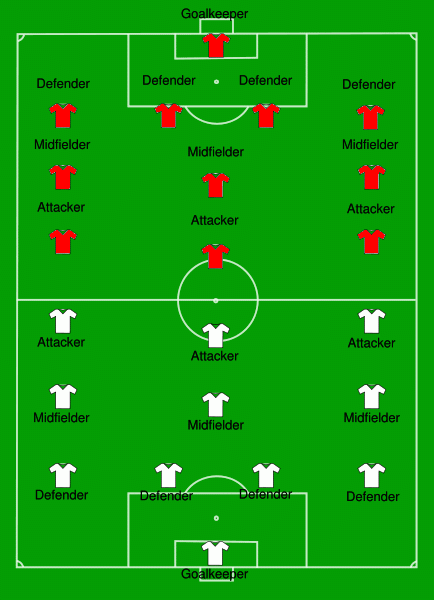
The goalkeeper is the person in charge of protecting the goal, making sure the other team doesn’t score. He is the only person allowed to use his hands to touch the ball, whether it be to make a save or to pass to a teammate. Defenders are positioned in front of the goalkeeper and move up with their team. While their main task is to defend against attacks, they can also start their own attacks and build momentum. 


Midfielders roam the middle of the field, serving as the link between the defense and the attack. They do a variety of things, such as defend, attack, gain possession, etc.; their position requires a little bit of everything. Lastly, attackers play at the front and lead the attack against the opposing team. They carry most of the goal-scoring burden and can combine with each other and the midfielders. There are sub-positions among these general positions, but I will cover those in another post. 

Here is a basic diagram that shows the different positions. As you can see, there are 11 players are each team that are split into attackers, defenders and midfielders. These are basic formations but like I said, teams can experiment with different formations and kinds of players.

Team Structure:

Each team is allowed eleven players on the field at once. While they can only have one goalkeeper, the other positions are more fluid. For example, some teams only play with three defenders whilst others play with four or five. Some teams only play with three midfielders whilst others play with only two. These are all different types of formations that coaches can use to organize their team. Some formations are more popular than others. 


Additionally, seven players are chosen to sit on the bench and are known as substitutes. For most games, coaches are allowed to make three substitutions for practical (a player gets injured) or tactical reasons. There are no guidelines for which players to have as substitutes, but there is always another goalkeeper to serve as backup just in case.

Winning the Game:

This one is fairly easy, although there are some exceptions. Whenever the ball goes into the net, it counts as a goal and whoever has more goals at the end of both halves wins. However, if both teams have the same amount of goals it ends in a draw. There are even some games where neither team scores a goal by the end of the game! These instances are draws as well.


The exceptions occur in special tournaments, games and competitions (all of which I will cover in the future). In these special occasions, a game will go into extra time if it is tied at the end of the first 90 minutes. There are two halves of extra time, each one being 15-minutes with the same injury-time rule. Even if a team scores in the first half, they will play out the rest of the extra time. If it is still tied after extra time, then the game moves to a penalty shootout to determine the winner. I will explain penalties later on. 

I know it’s a lot to take in, but that’s why I’m splitting it up into multiple parts. For now though, that concludes Part 1. Thanks for reading and I hope you’ll stick around for part 2 coming soon!

Welcome to Four Score Soccer

A brief introduction to this site

Welcome to Four Score Soccer! My name is Vincent Giacalone and I am eager and excited to launch this new project with you all. If you want to know more about me, just check the about section for more information. I’m using this post to outline what I hope to do with this site.

As you can tell, the focus of this site will be soccer–more specifically, American soccer. This means I will be talking about American players playing both here and overseas, in addition to American leagues and national teams. Because soccer is a global sport, however, I intend to discuss other leagues as well, especially those in Europe.

Additionally, because I intend to garner as big of an audience as possible, I’m going to cover a lot of bases with my pieces. That means I will try to appeal to newcomers to the sports and long-time fans alike. I would like to develop a system to properly sort out the different articles from each other but I have not decided on one yet. As I write more pieces and as the site takes on more life, I will make decisions as I go along. For now, however, the site will look very basic and all the articles will be in one place.

I hope you will enjoy this blog and consider following a soccer team, whether it be one here in the U.S. or maybe one in Europe. Either way, I thank you for being here, I hope you’ll stay a while and I hope you’ll come to love this sport just as much as I do! If you have any comments or questions, you can always email me at vincent.j.giacalone@gmail.com or just head to the “contact” section of this website.