What one award can tell us about the state of US Soccer
Outliers have always astounded me. To see individuals, groups and phenomena rise above the rest is so interesting. Take my favorite baseball team, the New York Mets. They’re not a consistently great team and have had many seasons of mediocrity. In fact, the last time they won a World Series was back in 1986.
That’s what made 2015, an outlier season, so special–they had a complete, competitive team that came up clutch on numerous occasions and made it to the World Series for the first time in 15 years. Unfortunately things didn’t end too well but it was still an amazing experience.
Then you have players like Lebron James, Lionel Messi, Tom Brady, Cristiano Ronaldo and Serena Williams–all phenomenal players who have reached the pinnacles of their respective sports. They are all outliers.
However, there are different kinds of outliers.
It all depends on the situation and what the examples are being based on. The term itself, a term I remember learning about in elementary school math, can refer to the lowest number in a group of data. On a different note, it can be the one kid in the class who failed the quiz while everyone else aced it or the one child in a family of doctors who flunks out of medical school.
Not all outliers are the same.
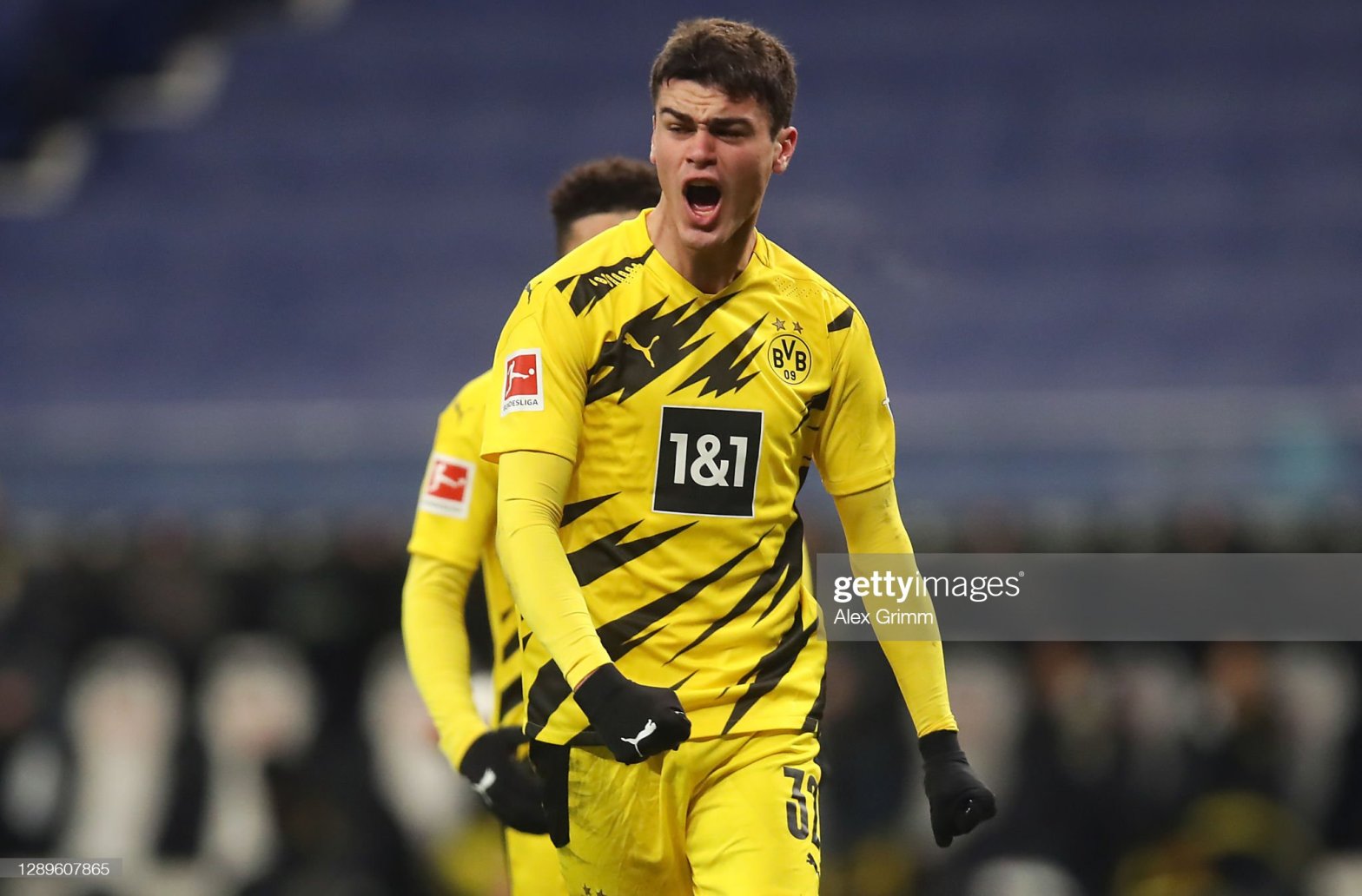
Since 1998, US Soccer has been awarding the Young Male Player of the Year award to, you guessed it, the best young male player in US Soccer that year. Last year, Giovanni Reyna won the award after impressive performances for both club (Borussia Dortmund) and country. He made his senior USMNT earlier in the year and has notched five goals and seven assists across all competitions for Dortmund.
What I find interesting, however, is taking a walk down memory lane. I was inspired by this tweet that shows a list of all the previous winners of the award since its introduction in 1998. The first time I looked at it and read through the names, I knew there was something to be discussed.
From 1998-2008 there is a pretty interesting group of names. I only started following the USMNT pretty recently so names like Josh Wolff and Bobby Convey don’t inspire anything in me. Then you have USMNT greats like Landon Donovan, DaMarcus Beasley, Jozy Altidore and Michael Bradley. Lastly, you have names like Ben Olsen, Freddy Adu and Benny Feilhaber who are still recognizable names without the same pedigrees as the others.
From 2014-2020 is a new generation, one full of hope and promise for the future. You’re looking at a group of guys playing at top or close-to-top leagues across the world. These guys are the building blocks for what’s to come.
And then you have the outliers.
I’m talking about 2009-2013: Luis Gil, Gale Agbossoumonde, Brek Shea, Rubio Rubin and Wil Trapp respectively.
I don’t know how to explain it but you just look at these names and…nothing happens. You kind of just shrug and look at the rest. On top of that, when you compare them to the names before and after you can tell there’s a discrepancy–a “generational gap,” if you will.
Before we get into the bigger picture, let’s take a look of what these athletes did to earn their awards.
The Outliers
- Luis Gil–2009: At 15 years old, he turned many heads for the U-17s at CONCACAF Championships and later on at the World Cup. The midfielder helped the US finish in second place in their group but unfortunately they were unable to beat Italy in the Round of 16. Even though he was the youngest player, he was still one of the best. I dug up this old ESPN article from 2010 that is a great profile of Gil and his background. Gil was wanted by myriad clubs across the pond (especially Arsenal) but he decided to stay in the US instead, ending up with Real Salt Lake via a trade by Sporting Kansas City. It’s safe to say that his reception of the award seems to be based more on potential than anything else. Sure, he did well with the U-17 but he hadn’t even played professionally yet. Even the then-U-20 coach, Thomas Rongen, showed some hesitation when he said, “‘it’s a little too early to tell’ how good Gil can be.”
- Gale Agbossoumonde–2010: This center back was 19 when he won this award, coming off of a six-month loan that sent him to S.C. Braga in the Primeira Liga of Portugal from Miami FC. He only played six games for Miami but managed to get some time with the Braga U-19s before playing in reserve games for the senior team. Unfortunately, he suffered a season-ending injury shortly thereafter. For the US, he actually did more in 2009. That year, he played for the U-20s in the CONCACAF Championships, helping them qualify for the World Cup. Despite starting in all three games for the US in that tournament, the US failed to get out of their group. In 2010, Agbossoumonde made his first and last appearance for the senior team in a friendly against South Africa.
- Brek Shea–2011: Shea’s name might still ring a bell because he still plays in MLS for Inter Miami. However, he won this award for his efforts with another MLS club–FC Dallas. He began his career straight out of high school and was drafted by Dallas. While he had a nice 2010 season with five goals and four assists in 25 appearances, he followed that up with an even better 2011 season that saw him notch the same amount of assists with 11 goals. He started 30 of 31 games, was an MLS All-Star, was selected in the Best XI, helped Dallas reach the playoffs and was an MVP candidate. Even though it was a quiet year for him internationally, he still made a great case for the award. It helped propel his career to an eventual move to Europe which…did not end up too well.
- Rubio Rubin–2012: This forward was just 16 years old when he won the award, two years before he made a move to Denmark and played for FC Utrecht. Not only did he spend this year with the Portland Timbers’ academy but, more importantly, he also spent it with the U-17s. Rubio, playing as an attacking midfielder and forward, scored 11 goals and notched three assists–including three goals in the last three games of the year. He was regarded as one of the best players on that team. On January 7th, Real Salt Lake signed him after a brief, yet effective stint for the San Diego Loyal SC in USL. He played for a couple of European teams before moving to Mexico and playing for some clubs there. He’s still just only 24 years old so he still has plenty of time to match the hype of his award-winning year.
- Wil Trapp–2013: Trapp, like Shea, most recently played for Inter Miami (Minnesota United signed him as a free agent back in January). However, he has spent most of his career playing for Columbus Crew SC. His first season in Columbus came in 2013, when he was 20 years old. Even though he only played in 16 games and notched one assist, he helped his team reach the playoffs and was Columbus’ Breakout Performer of the Year. For the US, Trapp played with the U-20s and helped them reach the 2013 FIFA U-20 World Cup. There, he played in all three games, as the US failed to make it out of the group stage. Despite this, he was included in the Best XI of the tournament. As a midfielder, he scored just one goal during his time with the U-20s.
As you can see, these five players, while having nice breakout seasons, set the bar pretty low for other US players. If these players were the best of the rest in their respective years, I can only imagine how everyone else performed. The fact that this era lasted for five years tells a lot about US soccer. Five years is an entire generation, an entire Olympic cycle, an entire high school turnover, an entire presidency.
In the five years since 2013, a new generation has spawned that has already surpassed those previous five years.
The New Generation
- 2014 winner Deandre Yedlin played for the US in the World Cup that year, helping them reach the round of 16. Later that year, he left MLS for Tottenham Hotspur in the Premier League. After a year there and a brief loan, he moved to Newcastle for the next four years. He recently signed for Galatasaray in Turkey at 27 years old.
- 2015 winner Matt Miazga helped the U-20s qualify for the 2015 FIFA U-20 World Cup, where they reached the quarterfinals. On the club side, he played for the New York Red Bulls in MLS where he played a part in their Supporter’s Shield-winning season. A year later, he completed a move to Chelsea and has been loaned out to multiple clubs since then. He is considered as one of the center backs of the future.
- 2016 winner Christian Pulisic doesn’t need much of an explanation, although that year he made his debut for both the senior USMNT and for Borussia Dortmund in Bundesliga. He scored goals for both teams and quickly became the next-big-thing for US Soccer. Fast-forward to today and he is still the face of US Soccer while playing for Chelsea.
- 2017 winner Josh Sargent was busy that year for the US. He became the only player to be called up for the U-17, the U-20 and the senior national teams in one year. Sargent was especially helpful for the U-17s and U-20s, as he helped them reach the quarterfinals in their respective World Cups. His move to German club Werder Bremen was announced late that year and he officially joined them in early 2018.
- 2018 winner Alex Mendez is a little bit of an outlier when compared to this group, but that doesn’t mean he is lacking in potential. In that year, he helped the US win the CONCACAF U-20 Championship as the tournament’s best player while signing with German club SC Freiburg shortly thereafter. About a year later, he signed with Danish club Ajax and currently plays for their reserve team.
The differences between these generations are astounding. In the span of 10 years, US Soccer went from handing the award to largely potential-based players who might have fizzled out to great, promising players who are actively performing on much bigger stages. On top of that, they hold crucial positions for the growth of the USMNT and will be involved for years to come.
Building a consistently successful national team is based on having consecutive generations full of talented players playing at elite levels. Like with anything, consistency is key. If the United States can continue this run of form and reduce the amount of “generational gaps”/outliers then USMNT will have a lot to look forward to in the future.
The USMNT has reached seven consecutive years. With the World Cup and Olympic qualifying tournaments starting soon, there’s no stopping them now. Hopefully, these players can make new outliers in the form of international trophies and success on the international stage
 Four Score Soccer