As a new year begins, so too does the next chapter of the United States Men’s National Team.
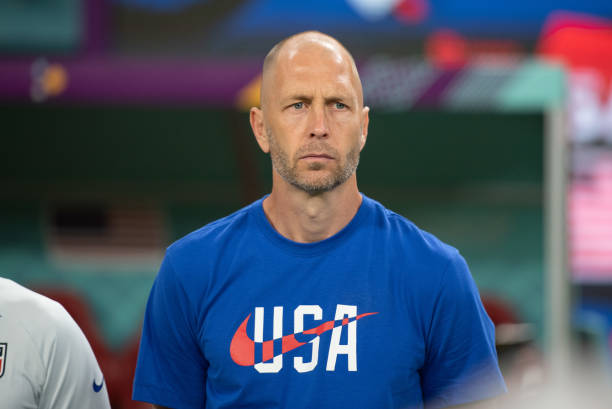
On January 1st of this new year, Gregg Berhalter’s head-coach contract with the USMNT expired, making him a free agent. After little communication about his situation leading up to the new year, a bombshell dropped shortly thereafter. In a shocking turn of events, Berhalter, on a newly created Twitter account, made the claim that he was blackmailed during the World Cup; in other words, someone brought an isolated incident of domestic violence to the attention of the U.S. Soccer Federation.
A day later, it was revealed that the perpetrator of the blackmailing was none other than Claudio Reyna, a USMNT legend in his own right and the father of Gio Reyna–the subject of much controversy over lack of playing time at the World Cup. The full situation is outlined here, but there has been no update on the situation since the initial incident. The USSF announced they would be starting an investigation, however.
As fans await the conclusion of this situation, it’s important to note that the head coach position is still up for grabs. So, while we wait, why not look at the nature of the head coach position? What makes this job so lucrative? What makes it one of the most intriguing positions in all of world soccer?
Current Situation
Even with all this drama, the USMNT still has some games to play. This week, the U.S. has two friendlies as part of their annual January camp: Serbia and Colombia. While this January camp has adopted the moniker of “Camp Cupcake” by USMNT fans (it isn’t an official FIFA-sanctioned international break so the roster mainly consists of MLS and other out-of-season players), it is still crucial for fringe players who wouldn’t normally be called up.
Shortly after all the drama came to the surface, the USSF did some crowd control by announcing Anthony Hudson as the interim head coach for this camp. After some brief stints with other national teams, Hudson returned to the U.S. to coach the Colorado Rapids in MLS. After two seasons there, the made his way back to the national team where he has been an assistant to Berhalter this past year.
While not the most earth-shattering of picks, it makes the most sense–Hudson has experience with Berhalter’s system and has had experience as a national team coach. He’ll naturally plug the head-coach hole for the length of this camp and (perhaps) for the duration of the investigation. Also, it was easy to upgrade him on such short notice.
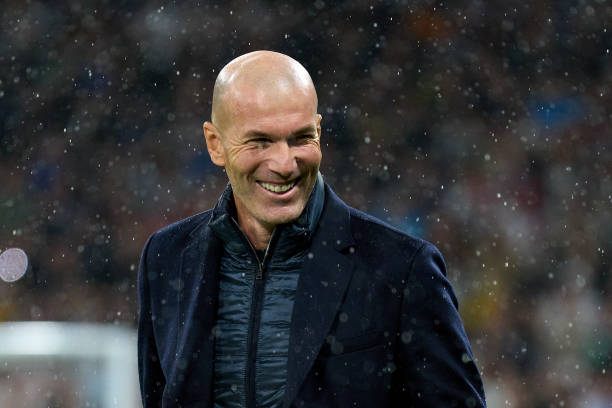
Aside from Hudson and the January camp, the U.S. has made inquiries into the availability of certain coaches. Most notably, the U.S. reached out to French legend Zinedine Zidane. A titan of the sport, he won the World Cup in 1998 as a player before eventually transitioning into a coach. As the head of Spanish club Real Madrid, he has won two league titles, three UEFA Champions League titles and two FIFA Club World Cups.
A free agent since 2021, he rejected the USMNT’s inquiry, as well as those of Brazil and Portugal. Despite this disappointing answer, it is good to know that the U.S. is at least trying their luck and exploring all avenues.
The Allure, Part 1: Major Tournaments
With all due respect to Zidane, this would have been an incredible chance for him.
The USMNT head coach position provides a unique opportunity. The team finds itself in the midst of a true resurgence after qualifying for their first World Cup in eight years. On top of that, the team defied expectations and made it out of their group. While they were beaten by the Netherlands in the round of 16, it was still a big accomplishment for a team with only one World Cup veteran.
Last year’s World Cup was only the beginning, as the USMNT has plenty of opportunities to improve themselves before the next World Cup in 2026–which just so happens to be in the U.S., Canada and Mexico (more on that later). Between now and then, there are two Gold Cups, two Nations Leagues and, according to some rumors, a Copa America. The USMNT captain himself, Tyler Adams, hinted that the U.S. would be participating in the quadrennial tournament between the South American national teams. While it has still not been confirmed, participation in this tournament would give the USMNT some great experience heading into the 2026. Additionally, while the U.S. has participated in and hosted this tournament, it has never won it. The new head coach would have the chance to lead the U.S. to a major tournament win.
While the Gold Cup and Nations League both exist, neither of these tournaments are on the same level as the Copa America. While it would be nice to win them, these events provide more of an opportunity for fringe or second-choice players to get some playing time; let’s not forget the lineup that Gregg Berhalter used in the 2021 Gold Cup Final against Mexico.
The Allure Part 2: Mining Untapped Potential
On top of the allure of some major tournaments, the USMNT head coach position offers the opportunity to cultivate a new generation of great players. Sure, the U.S. has its big stars like Christian Pulisic, Weston McKennie, Matt Turner, Tyler Adams, etc. However, now more than ever, the U.S. has a plethora of young players (both at home and abroad) who could really make an impact going forward.
Brenden Aaronson featured at the World Cup last year but what about his brother, Paxten Aaronson, who just completed a move to Eintracht Frankfurt? What about Gaga Slonina, the young goalkeeper who recently made his much-anticipated move to Chelsea? Let’s not forget about MLS standouts Brandon Vazquez, Paxton Pomykal and DeJuan Jones, all of whom have played well with their respective clubs. Lastly, you have young players like Diego Luna, Caden Clark, Kevin Paredes and Jack McGlynn (just to name a few), who could all be important contributors by the time 2026 rolls along.
The new USMNT coach would have the privilege of shaping the team to their liking with a large pool of players to choose from. The coach could give different players the opportunity to make a difference with the senior national team, providing some much-needed competition for certain roles/positions. In other words, the new coach would be crucial in developing the next generation of great soccer players.
The Allure, Part 3: Making Waves in 2026
If the new head coach does their job correctly and efficiently, the USMNT will have a serious chance to make some waves when the World Cup comes home in 2026. Between some major tournaments to build on and a large group of rising stars, 2026 could be the year where it all comes together.
The next head coach could cement themselves in U.S. Soccer history, both on the field and off.
On the field, the USMNT will look to improve on their 2022 World Cup campaign, hoping to make it past the round of 16. Even though the format will most likely be different with the addition of 16 more teams (bringing the total to 48), the USMNT will be looking to put on a good performance for their home fans. The farthest run for the U.S. at the World Cup came all the way back in 1930–the first-ever World Cup. They made it all the way to the semifinal, losing to Argentina. Another semifinal appearance could be in the works here.
Off the field, a strong USMNT run would help grow the sport in the country. Remember, when the U.S. last hosted the World Cup in 1994, it jump-started MLS in 1996 with just ten teams. Fast-forward to today and MLS has 29 teams, with St. Louis City SC starting its inaugural season this year. With the commissioner having set the bar at 32 teams, there will be even more areas of the U.S. covered by the time 2026 comes along–and that’s not even counting lower-division teams.
If the USMNT make an incredible run, soccer culture in the U.S. would explode. Imagine being the head of a team that single-handedly changes the way an entire country views soccer? That’s what the head coach position entails.
Conclusion
Sure, there are other positions around the world (both at the club and the country level) that offer great rewards and great opportunities. But, objectively, the USMNT head coach position is one of the most alluring.
With an important four years coming up before the 2026 World Cup, the new USMNT head coach would have the opportunity to elevate this team to one of the best in the world. There is no shortage of talent, no shortage of players playing abroad, an established team of stars and a country hungry for a competent soccer team. With four years at the new head coach’s disposal (and a couple important tournaments), they could lay the groundwork for U.S. soccer culture to come. Dramatic as it may sound, there is a plethora of opportunities for this young and hungry national team.
All they need is the right person to lead them to glory.
 Four Score Soccer